
Should You Be Prepping in 2026? The Calm Answer
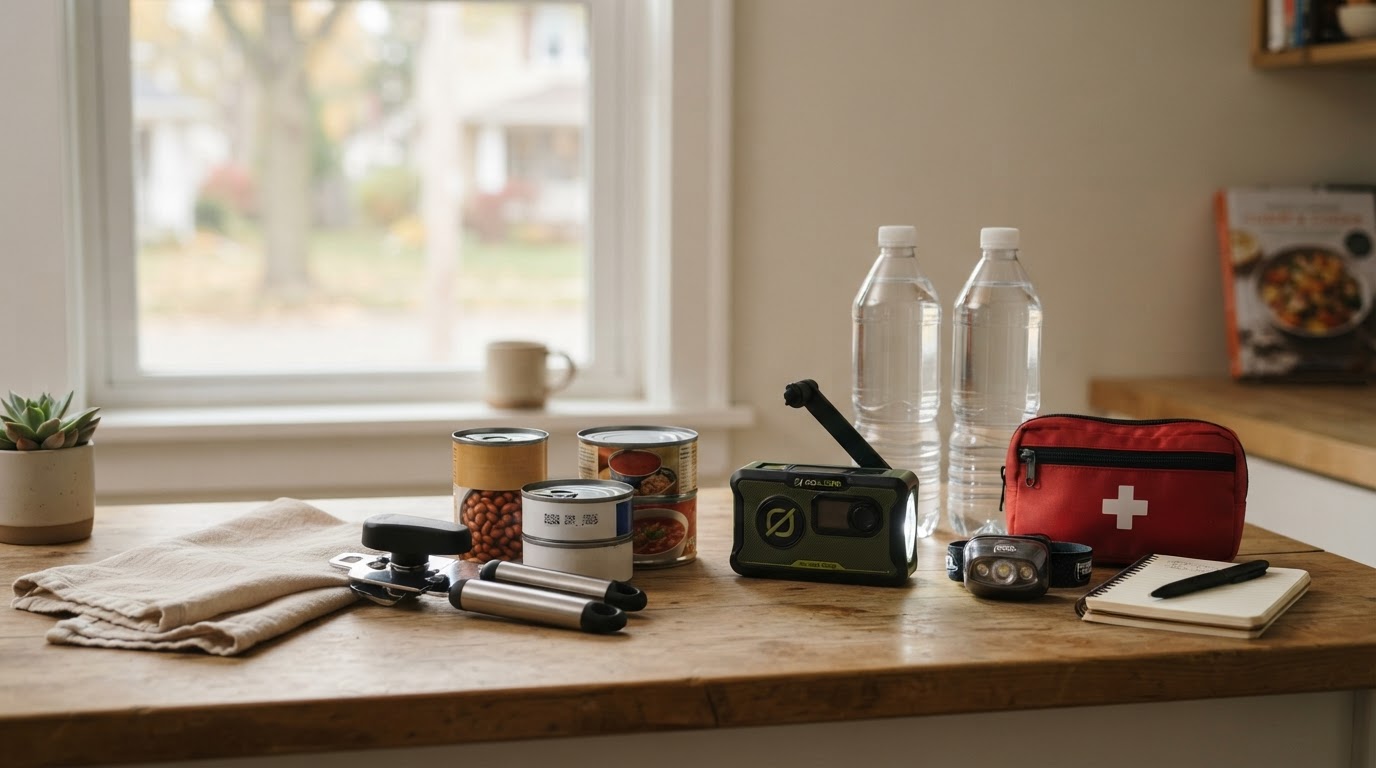
Not doomsday. Just math: the outages, storms, and job losses that actually happen, what they cost unprepared, and the $100 start that covers most of it.
This article contains affiliate links. If you buy through these links, we may earn a small commission at no extra cost to you.
More people are asking whether they should be prepping, and that is a reasonable question with a boring answer. Not bunkers. Not doomsday. Just the ordinary emergencies that already happen to ordinary households, and the small amount of preparation that makes them cheap instead of expensive.
What "Prepping" Actually Means Here
Forget the television version. Real preparedness is water when the main breaks, light when the grid fails, food when the storm closes the roads for three days, and a jump starter when the battery dies at night. Every item on that list is something your grandparents kept without calling it anything at all.
The Three Events Worth Preparing For
A multi-day power outage. It happens every year somewhere, often from weather nobody predicted. The cost unprepared: a fridge of spoiled food ($200+), a dead phone, a cold house. The cost prepared: about $77 in ice packs and a thermometer, plus a power bank you probably own.
A winter storm that strands you. Not the apocalypse: closed roads, no plow on your street, three days of eating from the pantry. The cost unprepared is mostly misery and a grocery run through ice. The cost prepared is a stocked shelf and a car kit.
A dead battery on a dark road. The most likely emergency on this list by far. The cost unprepared is a tow truck and a long wait. The cost prepared is a $40 HAIPHAIK Car Emergency Kit with Jumper Cables and a $100 jump starter that needs no second car.
What It Costs to Start
About $100 covers the core: water jugs (~$70 for two 7-gallon), a power bank (~$26), and a flashlight (~$18). That kit handles all three scenarios above at the survival level. Everything after that is comfort and depth, not necessity. Our first things first guide walks the exact order.
The Honest Objections
"I rent an apartment." Most of this fits in a closet. Water jugs, a power bank, a light, a first aid kit. No garage required.
"I can't afford it." Start with water, which is nearly free from the tap in containers you own. Add one item per grocery trip.
"Nothing ever happens here." Until it does, and then everyone shops at once. Preparedness bought calmly is cheap; preparedness bought during the emergency is expensive or unavailable.
The 30-Second Version
If the power went out tonight and the roads iced over, would you be comfortable for three days? If yes, you are already prepping and can stop reading. If no, take the 8-question readiness check to find your exact gaps, then fix the first one this week.