
What to Keep by Your Bed for Emergencies
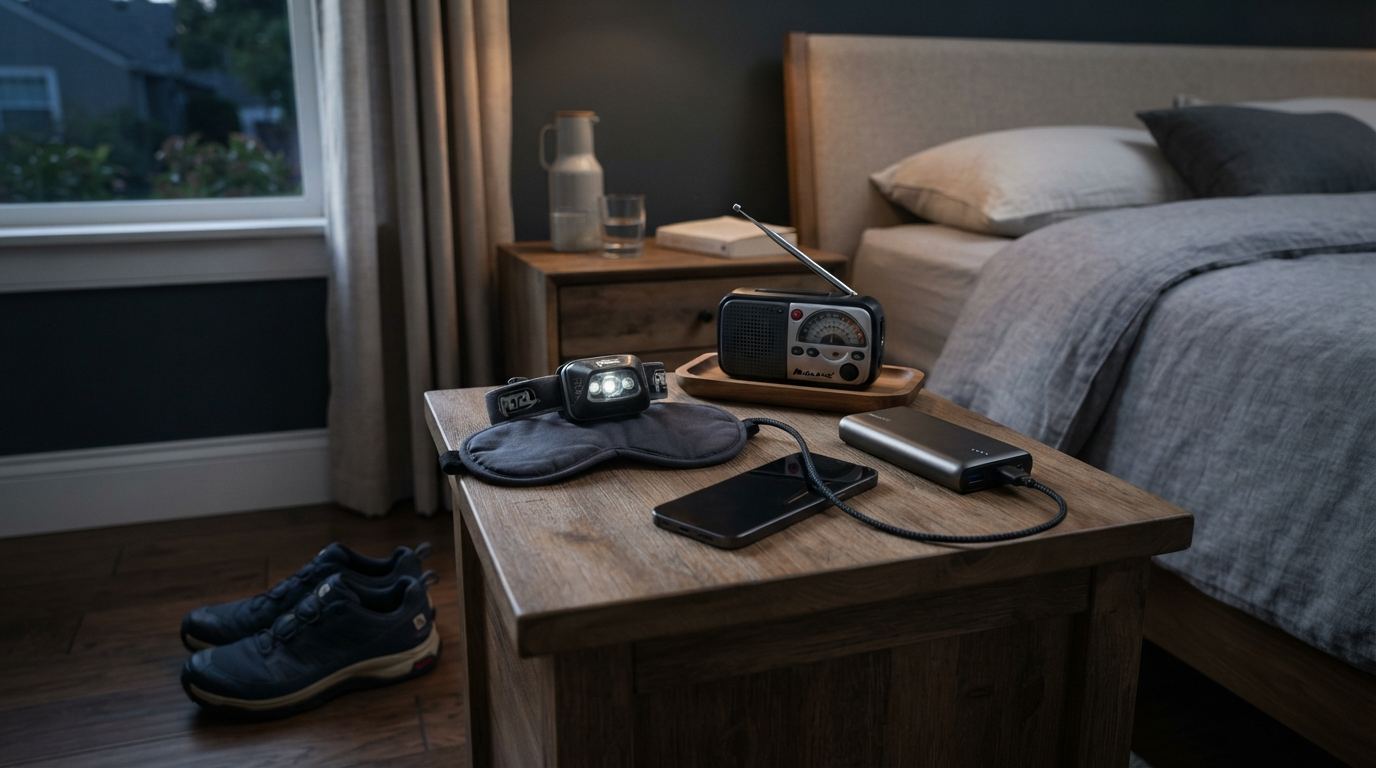
Night emergencies give no warning. A headlamp, shoes, a charged power bank, and a weather radio by the bed turn a 2 AM fire, quake, or outage into a drill.
This article contains affiliate links. If you buy through these links, we may earn a small commission at no extra cost to you.
Night is when you are least ready. You are asleep, the house is dark, your glasses are on the nightstand, and your shoes are in the closet. Then the smoke alarm goes off, the floor shakes, or the power dies at 2 AM and the hallway is pitch black. The numbers back the worry: the U.S. Fire Administration reports that portable-heater fires most often start in bedrooms (34 percent), and NFPA data shows fires in the overnight hours cause a share of deaths far out of proportion to their number.
The fix costs little and takes one evening. Set up a small bedside kit: five things within arm's reach that cover light, movement, power, and alerts. Everything below earns its spot by solving a specific 2 AM problem.
1. Light You Wear, Not Light You Hold
A handheld flashlight ties up one hand. At night you need both: one for a child, one for the door, both for feeling along a wall in smoke. A headlamp points where you look and leaves your hands free, which is why it sits first on this list.The Petzl Tikkina Headlamp (300 Lumens) (about $20) is one-button simple on purpose: one press, 300 lumens, no modes to cycle through with a sleeping brain. Hang it on the bedpost or hook it over the lamp shade so grabbing it is one motion. Put a second one wherever your household shelter spot is. Our emergency lighting guide compares the rest of the options for longer outages.
2. Shoes, Glasses, Keys: The 30-Second Exit
After a fire or a quake, bedroom floors collect glass, nails, and broken dishes. Bare feet turn a successful escape into an ER visit. Keep sturdy closed shoes under the bed, toes facing out, with socks stuffed inside. Slide-in shoes beat lace-ups here: at 2 AM, fine motor skills are gone.Next to the shoes go the three things people waste minutes hunting for:
- Glasses. A spare pair lives in the nightstand drawer, not just the bathroom. The VisionGlobal Reading Glasses 5 Pack, Blue Light… (about $14 for five pairs) makes this cheap: one pair in the drawer, one in the go bag, one in the car.
- Keys. On the same tray, every night. If the exit you planned is blocked, you may need the car fast.
- Medication you cannot skip. One labeled dose or a travel pill case for anything morning-critical: inhaler, EpiPen, insulin. Ask your pharmacist about keeping a spare set bedside.
Walk the route once with the lights off. Our home fire escape plan covers drawing the map and picking the second way out; the night version is the same map walked blind.
3. Phone Power: The Alerts Have to Reach You
Your phone is your alert screen, your flashlight backup, and your call for help. All three die with the battery. During storm season, charge the phone overnight on the nightstand, and keep a power bank next to it as the backup layer.The Anker Power Bank 10,000mAh USB-C (about $26) recharges a typical phone two to three times and holds its charge for months on the shelf. Top it up on the first of each month alongside the smoke-alarm test and it is always ready. For multi-day outages, our power outage survival guide covers bigger stations that run medical devices.
One habit matters more than the hardware: keep the bank itself charged. A dead backup is decoration. Plug it in whenever you notice it below half.
4. A Wake-Up That Works When the Phone Does Not
Cell towers fail, phones die, and storm alerts set to silent stay silent. A NOAA weather radio with its alert tone armed sounds on its own when the National Weather Service warns your county, asleep or not.The Midland ER310 Emergency Radio (about $80) belongs in the bedroom, not the kitchen: county-coded NOAA alerts, days of battery life, plus a hand crank and solar panel when the grid is down for days. Its built-in flashlight covers the walk to the shelter room. Set your county code the night you buy it and test the alert tone monthly. If tornadoes are your risk, our night tornado plan builds the full wake-up and dark-shelter drill around this radio.
5. What Does Not Belong by the Bed
A bedside kit also needs a do-not list, because the bedroom is where the worst heating mistakes happen:
- No space heater running overnight. The Consumer Product Safety Commission estimates portable heaters are involved in an average of 1,600 fires a year, and its guidance is explicit: turn them off when you sleep, keep three feet of clearance, and plug directly into a wall outlet.
- No candles as the outage light. After wind or quake damage, gas leaks happen, and open flame is how a bad night gets worse. Headlamps only.
- No power strip daisy chains. One heater-grade load per outlet; phone chargers are fine, heaters are not.
The Bedside Checklist
- Headlamp on the bedpost, batteries fresh (Petzl Tikkina Headlamp (300 Lumens))
- Slide-in shoes under the bed, socks inside
- Spare glasses in the nightstand drawer (VisionGlobal Reading Glasses 5 Pack, Blue Light…)
- Keys on the tray, every night
- Nightly medication dose labeled and dated
- Phone charging; power bank above half (Anker Power Bank 10,000mAh USB-C)
- Weather radio armed with your county code (Midland ER310 Emergency Radio)
- Escape route walked once with the lights off
- Monthly: test the radio tone, top up the bank, check headlamp batteries
Five items, one tray, one evening of setup. The goal is modest: when something wakes you at 2 AM, everything you need is already in your hands.
Frequently asked questions
What should I keep next to my bed for emergencies?
A headlamp, sturdy shoes, a charged power bank, a way to hear alerts, and anything you need to move: glasses, keys, medication. Five items, one small tray, checked monthly.
Why a headlamp instead of a flashlight by the bed?
Emergencies at night need both hands: carrying a child, opening doors, feeling along a smoky hallway. A headlamp points where you look and leaves both hands free; a handheld light ties one up.
Should I keep my phone charging by the bed during storm season?
Yes, and keep a charged power bank there too. Alerts arrive on the phone, but one dead battery ends that. A 10,000mAh bank recharges a phone two to three times and holds its charge for months.