
Car and Commuter Carry: Power, Light, Escape, and Air
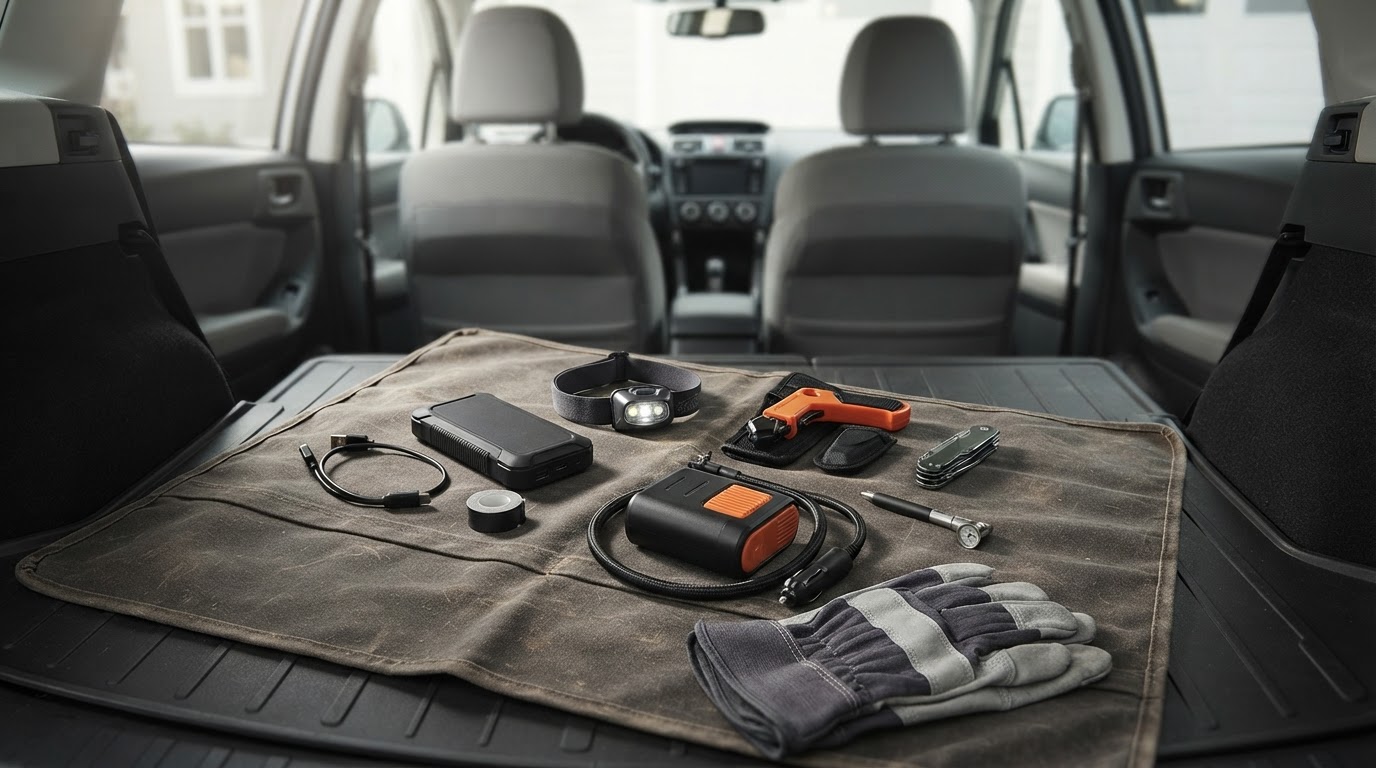
Daily carry for the commute and errands: pocket power, hands-free light, escape tool and tire fix that ride with you every workday in one full tested kit.
This article contains affiliate links. If you buy through these links, we may earn a small commission at no extra cost to you.
Most emergencies find you mid-errand, not mid-expedition. Dead phone, dark parking lot, flat tire, jammed belt. This kit rides along every workday: four pocket-to-trunk items that solve the common ones. For the pocket baseline, see our everyday carry guide.
Quick answer: Carry pocket power, a headlamp, an escape tool on your person, and an inflator in the trunk. Small, used weekly, always there.
Power first, because everything runs on the phone
Maps, payment, flashlight, rescue calls. A dead phone turns errands into emergencies. The bank below holds about 10,000 milliamp-hours, per the Anker listing: roughly two full phone charges at real-world efficiency. Cable lives with it, plus a car charger for the drive. Top up the bank weekly the way you charge the phone nightly.
Low-battery habits matter as much as gear. Download offline maps for your commute corridor, keep roadside numbers in the phone book rather than the cloud, and tell someone the route on bad-weather days. For outage-scale phone planning, see our power outage survival guide.
Light you wear, not light you hold
Breakdowns need both hands. The headlamp below throws hands-free light for tire checks, engine looks and walks from the far lot, per the Petzl listing. Pocket carry beats trunk storage: the dark stairwell and the dead garage never wait for the trunk run.
Keep a second light staged in the car for passengers. Check batteries seasonally and carry spares. For home outages the same habit scales up in our emergency lighting guide.
Escape tool on your person
Seatbelts jam and windows stick after crashes and flood shorts. The tool below pairs a belt cutter with a spring glass breaker in keychain size, per the resqme listing. It rides clipped to keys or visor, reachable while belted and upside down, because a trunk tool cannot cut your own belt.
Practice parked first: draw, seat the blade, rehearse the breaker angle on nothing. Order matters in water: belt off, window out, children first, then yourself. Swimming out a door fights pressure; windows break easier. Our car emergency kit guide stages the rest of the vehicle kit around it.
Air in the tires every month
Most flats announce themselves slowly. The inflator below runs off the 12-volt socket and tops a low tire to shop-safe pressure in minutes, per the EPAUTO listing. Monthly checks catch the pattern: same tire low twice means a nail and a shop visit, not a third top-up.
Learn the placard, not the sidewall. Door-jamb pressure is the car setting; sidewall maximum is the tire limit. Check cold, including the spare twice a year. Sidewall cuts and blowouts still need the spare or a tow: the inflator buys errands and commutes, not miracles.
Starter checklist
See Gear Worth Buying for the four picks referenced below.
| Item | Why | Source |
|---|---|---|
| Charged power bank plus cable | Dead phone ends options | see pick below |
| Headlamp in pocket or bag | Hands free in the dark | see pick below |
| Escape tool on keys or visor | Reachable belted | see pick below |
| Inflator in trunk | Slow leaks solved roadside | see pick below |
| Monthly pressure check | Patterns warn early | Placard habit |
| Offline maps downloaded | Towers fail too | Phone settings |
Gear Worth Buying
- Anker Power Bank 10,000mAh USB-C (~$25.99, 4.5 stars): pocket power bank for phone charges anywhere.
- Petzl Tikkina Headlamp (300 Lumens) (~$19.95, 4.2 stars): hands-free headlamp for breakdowns and dark walks.
- RESQME Original Emergency Keychain Car Escape Tool (~$10.95, 4.6 stars): keychain belt cutter and glass breaker.
- EPAuto 12V Portable Air Compressor (~$35.97, 4.5 stars): 12-volt inflator for slow leaks and monthly top-ups.
Source notes: Driving and vehicle safety per NHTSA guidance. Product specs per maker listings.
Frequently asked questions
How is commuter carry different from a go-bag?
Size and habit. Commuter carry is pocket and console gear you use weekly: power, light, escape tool, tire fix. A go-bag is a packed 72-hour kit for leaving. Our everyday carry guide covers the pocket baseline this builds on.
Where should the escape tool live?
On the keychain or clipped to the driver visor, reachable belted and upside down. A tool in the trunk cannot cut your belt. Practice the motions parked before you need them moving.
Can a portable inflator replace a spare tire?
No. It handles slow leaks and low pressure so you reach a shop safely. Sidewall cuts, blowouts and shredded tires still need the spare or a tow. Check pressures monthly, including the spare.