
Winter Driving Safety: How to Drive in Snow and Ice (2026 Guide)
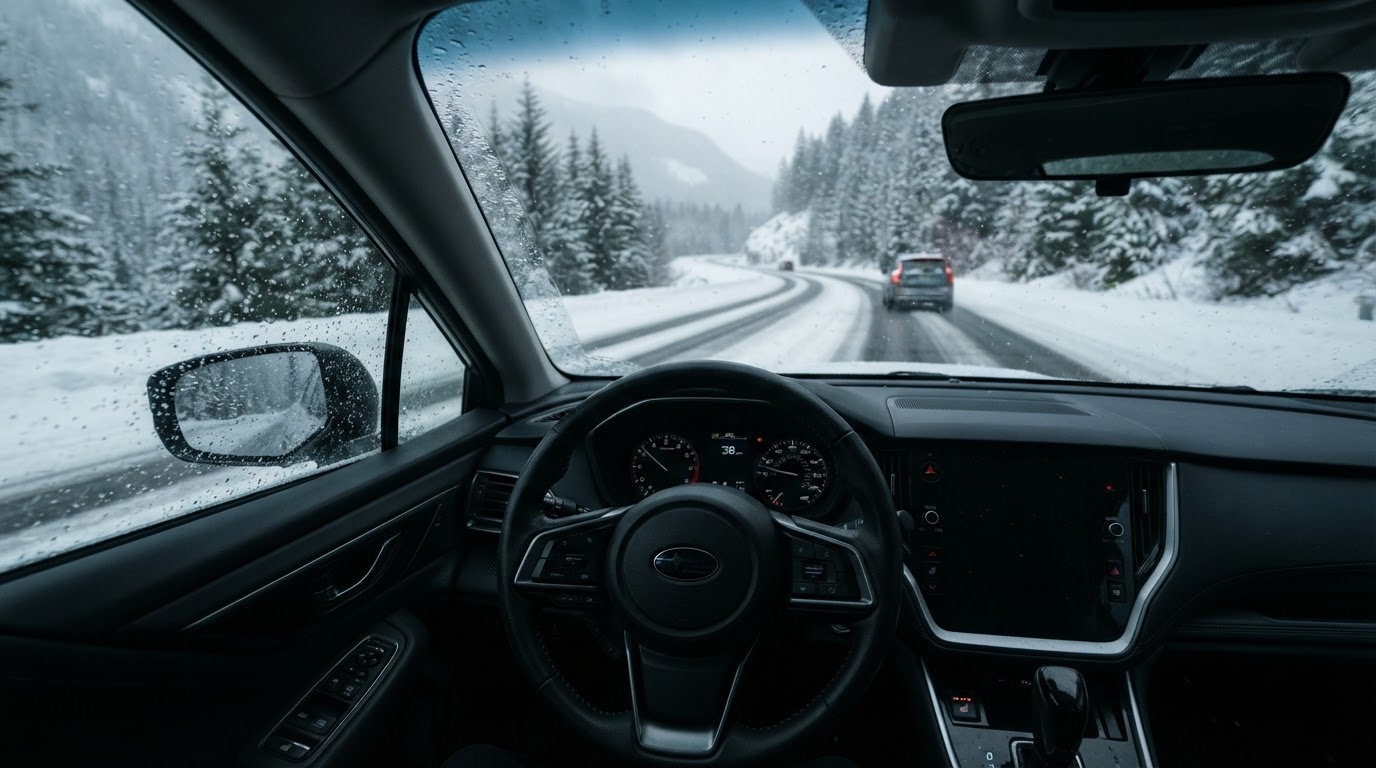
Winter driving safety for 2026: how to drive safely in snow and ice, slow for black ice, recover from a skid, and prepare for being stranded in your car.
This article contains affiliate links. If you buy through these links, we may earn a small commission at no extra cost to you.
Slow down before you reach a turn, bridge, hill, or stop. No fixed fraction of the speed limit is safe on every winter road because grip can change within a few yards. Leave a much larger gap than you would on dry pavement, and make each steering, brake, and throttle input gently. If ABS or traction control activates during routine driving, slow down more.
About one in four U.S. weather-related crashes happens on snowy, slushy, or icy pavement, according to the Federal Highway Administration. Low grip turns an ordinary mistake into a slide, so plan for it before the temperature drops.
Choose Speed From Grip, Not the Sign
The posted limit assumes favorable conditions. Winter roads need a different test: can you steer and slow without abrupt inputs?
- Snow: reduce speed before turns and hills. If the tires spin or ABS activates during normal driving, slow down again.
- Freezing rain or continuous ice: postpone the trip when possible. If you are caught in it, ease off gradually and get to a safe place without sudden braking.
- Following distance: leave enough room to slow with light, steady brake pressure. Add more space on hills, bridges, and untreated roads.
Tires Matter More Than 4WD
- Winter tires are built for cold pavement, snow, and ice. Their tread and rubber compound provide more winter grip than a typical all-season tire. They still cannot rescue a fast entry into a turn.
- AWD and 4WD help you go, not stop or steer. They do not shorten stopping distance or add grip in a curve.
- Measure tread before the season. Use a tread-depth gauge. For regular snow driving, consider replacement around 4/32 inch rather than waiting for the 2/32-inch legal minimum used in many states; a penny test only catches that lower threshold.
The 5-Minute Pre-Drive Check
Before any trip when snow is forecast, five minutes covers most failures:
- Clear the whole roof. A ridge of roof snow slides forward onto the windshield when you brake or turn, and it can blind you at speed. Clear the roof plus every window, light, and plate.
- Run on a full tank. A cold car burns about double its normal fuel on short trips, and that fuel is your heat source if you get stuck.
- Set cold tire pressure. Pressure drops about 1 psi per 10°F, so a pressure that was fine in October reads low in January. Fill to the door-sticker number while the tires are cold. A plug-in inflator like the EPAuto 12V Portable Air Compressor turns this into a two-minute job.
- Phone charged, route shared. Tell someone the route and when to expect you; on rural two-lanes, coverage can vanish for miles.
Braking and Skids: What Actually Works
- With ABS: press the brake firmly and keep it pressed. The system pulses for you; pumping wastes the advantage and lengthens the stop.
- Without ABS: use threshold braking. Press until the wheels are about to lock, ease off a hair, and repeat.
- Understeer (the front slides and the car keeps going straight when you turn): ease off the gas, reduce the steering angle, and wait for the front tires to regain grip. Turning the wheel farther asks for grip the tires do not have. Once they bite again, steer smoothly where you want to go.
- Oversteer (the rear slides out, the classic fishtail): look where you want to go and steer gently in the direction the rear is sliding. Straighten the wheel as the car lines up so you do not snap into a second skid.
- Do not hit the gas to power out. More throttle usually makes the slide worse. Ease off and steer smoothly.
- Turn off cruise control on winter roads. Direct pedal control makes it easier to respond gently when grip changes.
Black Ice: Where It Hides
Black ice is ice you can't see, and it costs most of its victims on two types of road: bridges and overpasses, and shaded curves.
- Bridges and overpasses freeze first and stay icy longest. The deck loses heat from both sides, so it runs several degrees colder. If it's at or below freezing and the road looks wet, suspect ice.
- Shaded spots and dawn. Ice lingers longest where the sun doesn't reach, which is why it's worst at dawn and on the north side of hills.
- Traffic slowing for no visible reason. Near freezing, match the pace and assume the road ahead has less grip than the pavement under you.
The same invisible ice catches walkers, not just drivers. Our guide to walking on ice safely covers the foot-side version: the shuffle, where it hides, and what to do after a slip.
If You Get Stuck: Stay With the Car
The move that feels least productive is usually right: stay put. The car is shelter, and rescuers look for it, not a person walking.
- Run the engine about 10 minutes per hour for heat. Clear snow from the tailpipe first, every single time. Carbon monoxide is the silent killer here; a blocked exhaust pipes it straight into the cabin. Crack a downwind window an inch while the engine runs.
- Make yourself visible. Tie a bright cloth to the antenna or door handle, keep the dome light on, and put flares behind the car. The Ecoangel USB-C Rechargeable LED Road Flares, 3-Pack set is three USB-C units with a magnetic base and nine flash modes including SOS. Reflective triangles like the … work when you can walk back far enough to set them out. Call for help, then stay put.
- Keep a NOAA radio in the car. It gives you warning updates and the all-clear instead of leaving you guessing. The Midland ER310 Emergency Radio has a rechargeable battery, hand-crank backup, NOAA alerts, and a flashlight. On a budget, the RunningSnail MD-090 Emergency Radio packs alerts and USB charging into a glove-box-sized unit.
- Power for the phone is power for the rescue. Your phone tells people where you are, so keep it charged. A EcoFlow RIVER 3 Portable Power Station holds 245Wh, enough to recharge a phone a dozen or more times.
Winter driving starts before you leave the driveway. Our winter car emergency kit covers what to pack, and the winter storm survival guide handles the home side of the same storm. Learn how to drive on ice now, before you have to learn it on the road.