
Turkey Fryer Safety: Oil Math, Setup Distance, and the Mistakes That Start Fires
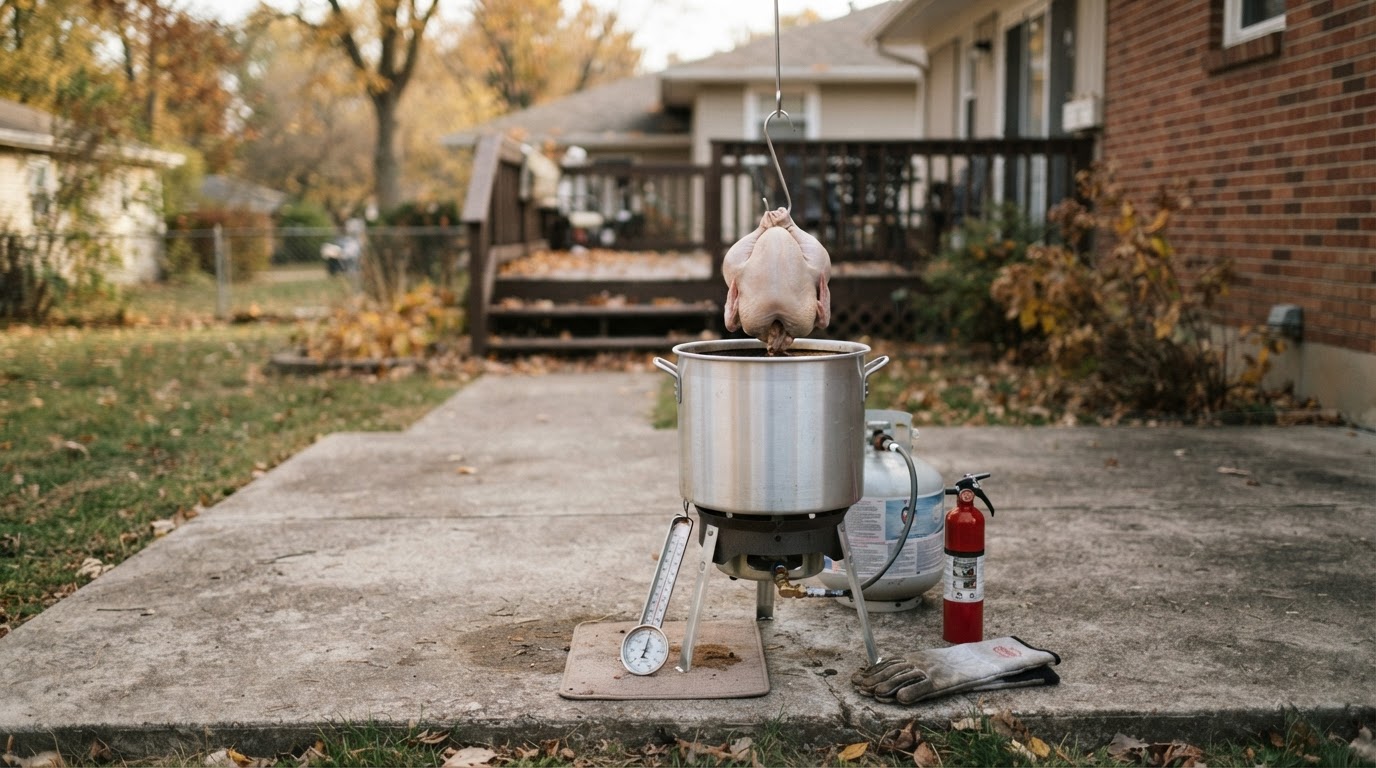
Frying a turkey for Thanksgiving? NFPA data on fryer fires, plus the 10-foot setup rule, the cold-oil measuring trick, and thaw rules that keep the cook safe.
This article contains affiliate links. If you buy through these links, we may earn a small commission at no extra cost to you.
Thanksgiving is the peak day for home cooking fires in the United States, with more than three times the daily average, according to the National Fire Protection Association. On Thanksgiving Day 2024 alone, fire departments reported an estimated 1,139 home cooking fires, about 321 percent of a normal day. Oil turkey fryers earn a special warning inside that data: the NFPA states flatly that fryers using cooking oil are not safe and strongly discourages their use, a position it shares with the Consumer Product Safety Commission after joint live-burn demonstrations. Deep fryer fires cause an average of 5 deaths, 60 injuries, and more than $15 million in property damage each year.
You can still fry one safely. The fires follow a short list of repeat mistakes, and every one of them is preventable with setup discipline. Here is the full method.
Set it up like it can burn, because it can
Run the fryer outdoors only, on a flat and level surface, at least 10 feet from your home and any other structure. That distance comes from state fire guidance echoing the NFPA position: never in a garage, never on a deck connected to the house, never under eaves or near anything combustible. A fryer that tips or boils over next to siding turns a cooking accident into a structure fire in under a minute, which is exactly what the NFPA/CPSC burn demo showed.
Keep kids and pets at least 3 feet from the cooking area, the same radius the NFPA recommends for all stovetop cooking. Turn the propane tank valve so you can reach it without leaning over the pot, and confirm your phone is on you, not inside, so calling 911 never requires going back toward the fire.
Stage your fire tools before the oil heats. A multipurpose ABC extinguisher like the Kidde Kitchen + Home Fire Extinguisher Set (2-pack) (about $45 for the two-pack, so one lives by the fryer and one stays in the kitchen) covers oil, wood, and electrical fires. A BOZZYS Emergency Fire Blanket (40 x 40) (about $10) smothers a flare you can lay it over without leaning across the flames. Know the PASS technique and the fight-or-leave rules now, not while oil is burning.
Measure the oil cold, not by guessing hot
Overfilling is one of the two classic fryer fires, and the fix takes five minutes the day before. Put the thawed turkey in the cold empty pot, add water until it covers the bird, and mark that water line. Remove the turkey, dump the water, dry the pot completely, and fill oil only to the mark. Most fryers also print a max-fill line; respect whichever is lower.
Heat the oil slowly and watch it. If you see wisps of smoke or the oil smells sharp, it is too hot: turn the burner off. Smoke is the warning sign the NFPA names for all oil cooking, and on a multi-gallon fryer the margin between shimmering oil and smoking oil is smaller than on a skillet. Never leave a heating fryer unattended for any reason. Unattended equipment factors into a quarter of reported home cooking fires and half of the associated deaths, per NFPA research.
Thawed and dry is non-negotiable
The other classic fryer fire is the frozen bird. Ice on or inside the turkey flashes to steam the instant it hits hot oil, and expanding steam throws gallons of burning oil out of the pot. The turkey must be completely thawed and then patted dry inside and out, cavity included. A partially frozen turkey does not produce a slightly worse result; it produces a fireball.
Lower the bird slowly. Use the hook or basket, wear long sleeves, and ease it in a few inches at a time so displacement happens gradually instead of all at once. If oil starts rising toward the rim, stop lowering and let it settle. Stand to the side, not directly over the pot, while you work.
While it cooks, and when it is done
Stay with the fryer the entire cook. Keep a lid or sheet pan nearby that fits the pot, keep the extinguisher within reach, and keep the area clear of anything that catches fire: towels, paper plates, propane-cylinder packaging. When the bird is done, kill the burner before you lift anything, then lift slowly and let oil drain back into the pot. Let the oil cool completely, for hours, before you move the pot or strain the oil. Moving hot oil is how severe burns happen after the cooking went fine.
If it ignites
Cut the heat only if the controls are safe to reach without leaning over the fire. Otherwise leave, get everyone out, close the door behind you, and call 911 from outside. Never move a burning fryer, and never throw water on an oil fire; water flashes to steam and spreads the burning oil. Our grease fire guide covers the same fight-or-leave decision for kitchen fires.
If anyone is burned, cool running water for 20 minutes is the first aid that matters most; the full protocol is in our burn first aid guide. A box of Water-Jel Burn Jel Packets, Box of 25 (3.5 g) (about $18) in the cook kit covers the minor splatter burns while the tap handles the serious ones.
The safest fryer uses no oil
The NFPA's actual recommendation: buy your fried turkey from a grocery store or restaurant, or use an oil-less infrared fryer. An oil-less model like the Char-Broil Big Easy Oil-Less Turkey Fryer (about $119) cooks the bird on propane heat with no multi-gallon oil reservoir, which removes both classic failure modes at once. If you fry with oil once a year for tradition, the steps above are the price of admission. If you just want the flavor, outsource the risk.
The 60-second fryer checklist
- Fryer outdoors, level ground, 10+ feet from every structure
- Turkey fully thawed, patted dry inside and out
- Oil measured cold with the water-line method, at or below max-fill
- Extinguisher and fire blanket staged, phone on your person
- Kids and pets behind the 3-foot line
- Burner off before lifting, oil cooled for hours before moving
- Escape plan reviewed with every guest: two exits, one meeting spot outside, per our home fire escape plan
Frequently asked questions
How far from the house should a turkey fryer be?
At least 10 feet from your home and any other structure, on a flat and level surface outdoors. Never run one in a garage, on a deck attached to the house, or under eaves.
Can you fry a partially frozen turkey?
No. Ice turns to steam and throws burning oil out of the pot, which is how most fryer fires start. The bird must be fully thawed and patted dry inside and out before it goes near hot oil.
How much oil goes in a turkey fryer?
Less than you think. Put the turkey in the cold pot, cover it with water, mark the water line, then dry everything and fill oil only to that mark. Overfilling is the other classic cause of spillover fires.