
How to Use a Fire Extinguisher: PASS, Classes, and When to Get Out (2026)
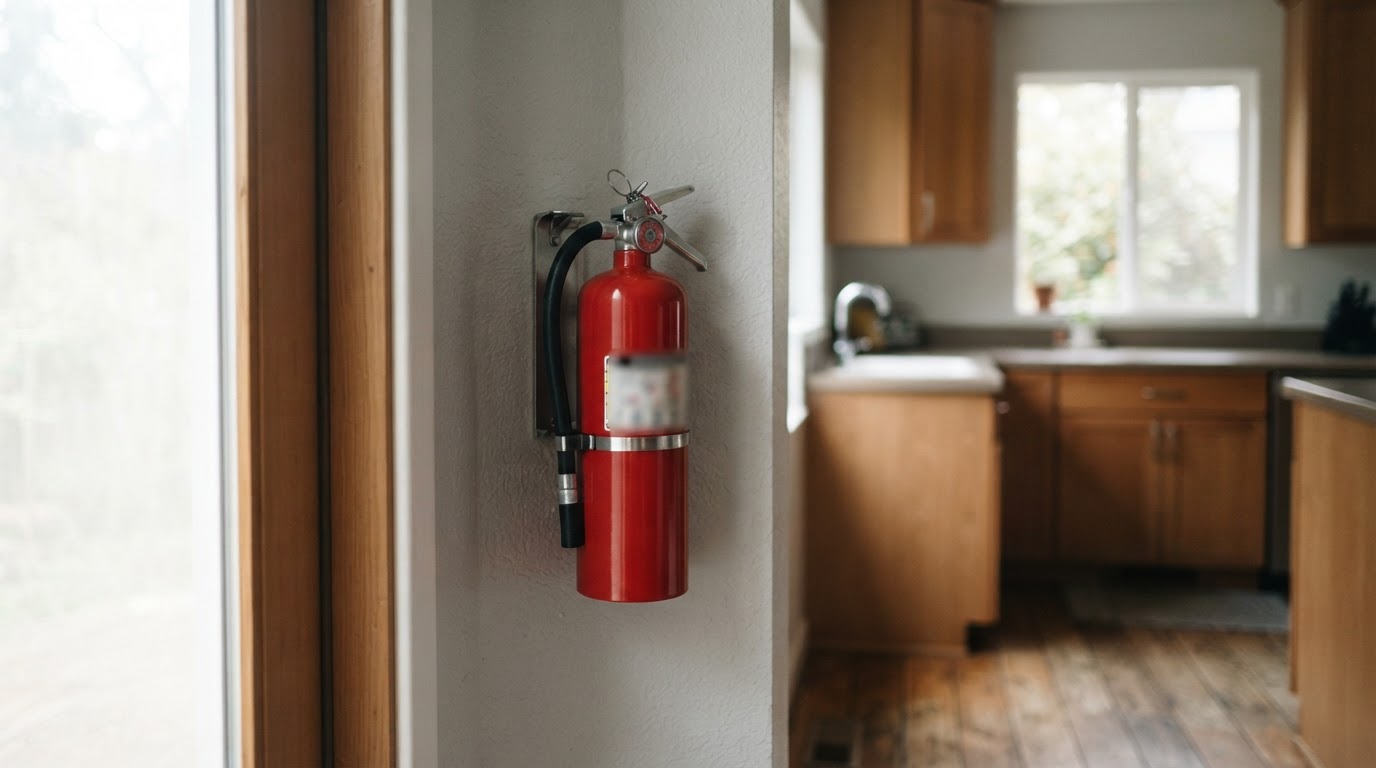
How to use a fire extinguisher: the PASS technique, what the A-B-C class ratings mean, where to mount one, and when to fight a small fire or walk away.
This article contains affiliate links. If you buy through these links, we may earn a small commission at no extra cost to you.
A fire extinguisher only works if you have already decided how to use it. The technique takes ten seconds to learn. The decision matters more: most home fires are a get-out event, and an extinguisher is only for the small, contained ones.
Cooking is the leading cause of home fires. Fire-safety guidance puts the order plainly: get people out, call 911, and use an extinguisher only on a small fire that does not block the exit. Using one on a fire that is already too big wastes the minutes needed to leave.
Quick answer: Use PASS. Pull the pin, aim at the base of the fire, squeeze the handle, sweep side to side. Stand 6 to 10 feet back with a clear exit behind you. Fight only a small, contained fire; if it is growing, the smoke is thickening, or you have to move toward it, leave and call 911.
The PASS technique, step by step
- Pull the pin. It keeps the handle from being squeezed in the bracket. A firm tug breaks the tamper seal.
- Aim at the base of the fire. Not the flames. The burning material is the fire, and the powder has to land on it.
- Squeeze the handle. Hold the unit upright and squeeze all the way down. Keep spraying rather than pumping the trigger.
- Sweep side to side. Work across the width of the burning area, starting at the edge closest to you.
Stand 6 to 10 feet away with the exit at your back: close enough to reach the base, far enough that the flames are not on you.
A home extinguisher empties in seconds, so the first sweep is most of what you get. If the fire is still burning when the spray stops, stop fighting. Back out, close the door behind you, and call 911 from outside. Fires that look out can reignite; watch the spot from a doorway before you leave it.
What the classes and numbers mean
The letters tell you which fires the unit can fight. The numbers tell you how big a fire it passed its test on.
- A: ordinary combustibles. Wood, paper, cloth, trash.
- B: flammable liquids. Gasoline, solvents, paint thinner, liquid grease outside a cooking appliance.
- C: energized electrical equipment. Cords, outlets, appliances still plugged in.
- K: cooking oils and fats. The pan of oil, the deep fryer.
A rating like 1-A:10-B:C is the standard household label. It handles a small wood-and-paper fire (about a wastebasket) and up to 10 square feet of burning liquid, and it is rated safe on live electrical equipment. That covers the fires a house actually has. Look for the UL rating, not just the word "ABC," and skip anything unrated. A Class K unit earns its price only if you deep fry regularly.
Where it belongs
- Kitchen: on the wall along the way out, a few steps from the stove. You should never reach across a burning pan to grab it.
- One per floor, near an exit. A basement and an upstairs hallway each get their own.
- Garage: near the door, not inside the area where fuel is stored. If the fire is where the fuel is, that is a leave-the-building fire.
- Mounted in the bracket, in the open. Not under the sink or in a cabinet. If you have to search for it, it does not exist.
Check the gauge monthly: needle in the green, pin intact. Replace disposable units by the date on the label, usually 10 to 12 years, and replace or recharge after any discharge, even a short test spray. A half-empty unit still reads green. Teach the technique to everyone old enough to be home alone, alongside the escape plan.
When to fight and when to leave
Fight only when all of these are true:
- The fire is small and contained: a pan, a single appliance, a wastebasket.
- Everyone else is already on their way out.
- You have a clear exit at your back.
- The room is not filling with smoke.
Leave when any of these is true:
- The fire is bigger than a wastebasket or moving fast.
- Smoke is thickening. Leave immediately; smoke can overcome you before the flames reach you.
- The fire sits between you and the door.
- You are not sure what is burning.
The one-extinguisher rule is the honest test. You get one unit's worth of spray. If the fire is still alive when it runs out, this is a house fire now. Get everyone out, call 911 from outside, and stay out. That call costs nothing even if the fire is out by then.
If the fire touches anyone, stop the fire first, then treat the burn (burn first aid). If you smell gas, leave and call from outside (gas leak guide).
Kitchen fires work differently
The stove is where most home fires start, and the rules flip there:
- Turn off the burner first if you can reach the knob without passing through flame.
- Grease and oil: never water. If the fire is still small and you can reach the controls without crossing flame, turn off the burner and slide a metal lid over the pan from the side. Leave it covered until cool. Do not move the pan.
- A fire blanket is a backup, not a reason to stay. A blanket labeled for cooking fires can help only when you have a clear path to the exit and can follow its directions without leaning over the pan. The BOZZYS Emergency Fire Blanket (40 x 40) costs about $11. If flames are spreading or smoke is building, leave and call 911.
- Oven or microwave: keep the door closed and turn the appliance off. If the fire does not go out promptly, leave and call 911. Cut power at the breaker only if you can reach it without approaching the fire.
Which one to buy
| Unit | Rating | Price | Notes |
|---|---|---|---|
| Kidde FA110G Home Fire Extinguisher (1-A:10-B:C) | 1-A:10-B:C | ~$20 | 4.8 stars; the standard home unit |
| First Alert HOME1 Fire Extinguisher | 1-A:10-B:C | ~$20 | 4.8 stars; same class, fine to mix |
| BOZZYS Emergency Fire Blanket (40 x 40) | n/a | ~$11 | Kitchen backup; follow its cooking-fire directions |
Sizing has a trade-off: bigger units spray longer but weigh more, and a 1-A:10-B:C unit at arm's reach beats a 4-A:60-B:C unit in a closet. Check the gauge when it arrives and learn PASS on a full unit.
Source notes: NFPA guidance on portable extinguishers and home fire safety, plus U.S. Fire Administration (FEMA) tips on use and placement. Many fire departments offer free hands-on training; check yours.