
Tick Bites and Lyme: Removal, Signs, and Care
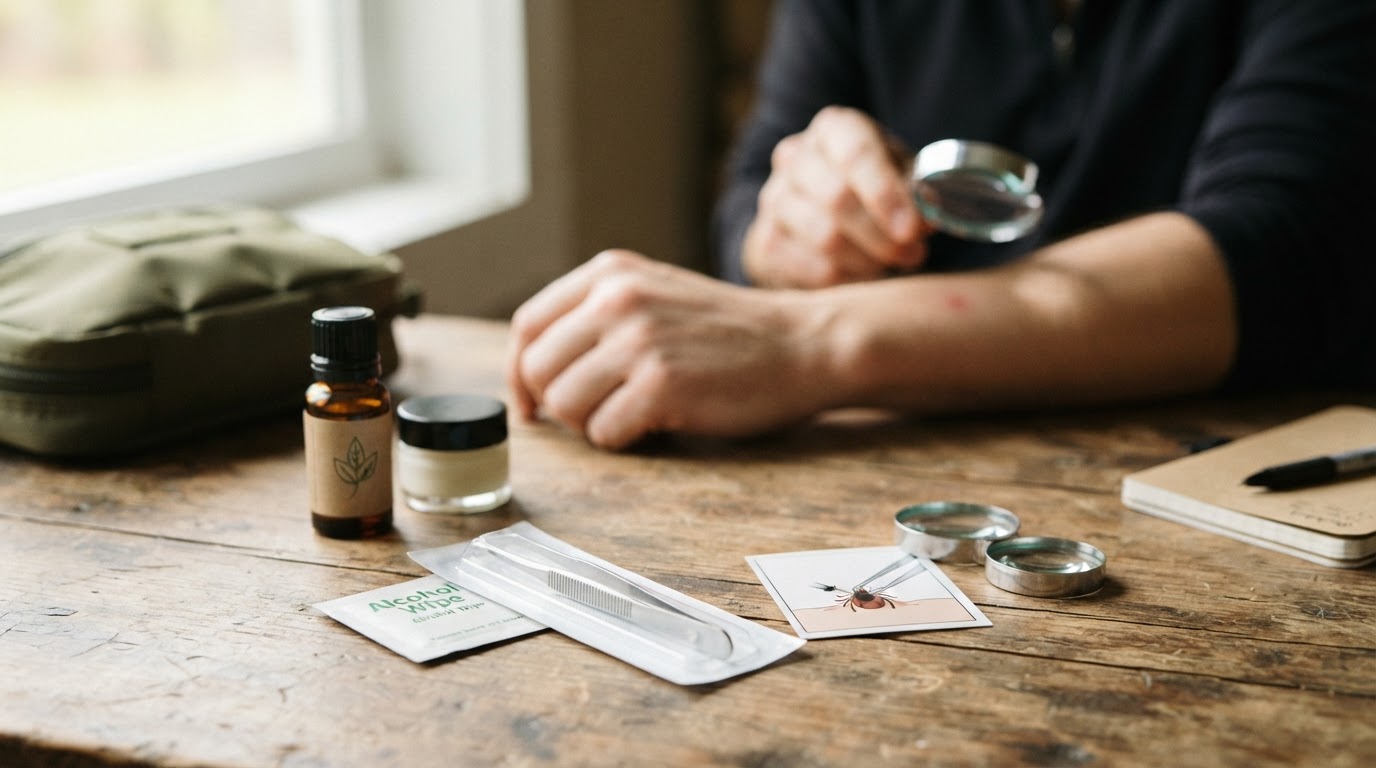
Prevent, remove, and watch tick bites right: full repellent routine, clean removal method, Lyme signs to track daily, and when to call the doctor fast.
This article contains affiliate links. If you buy through these links, we may earn a small commission at no extra cost to you.
Gardeners, hikers and chicken keepers meet ticks first. Lyme disease is the main risk, and early care cures most cases. This guide covers repelling, removing and watching. It is first aid, not diagnosis: rashes and fevers belong to a doctor fast. For the garden and flock hours that bring the exposure, see our calorie garden starter and backyard flock guide.
Quick answer: Treat clothes with permethrin, skin with picaridin, check head to toe after every outing, pull ticks clean with tool or tweezers, and call the doctor for rashes, fevers or engorged deer ticks.
Repel before you go out
Two products, two jobs. Permethrin goes on clothing, boots and gear only, never on skin, and survives several washes, per the maker and EPA labeling. The trigger spray below treats outfits the night before, per the Sawyer listing. Picaridin goes on exposed skin as the DEET alternative that will not melt gear coatings, per the maker specs. The pump spray below covers arms, legs and neck, per the Sawyer listing.
Clothes help too. Tuck pants into socks in tall grass, wear light colors that show ticks, and stay center-trail. Treat the garden uniform like work gear: same treated set, washed and re-treated on schedule. Shower within a couple of hours of coming inside and tumble dry worn clothes on high heat, which kills ticks laundry misses, per CDC guidance.
Check everywhere, every time
Ticks climb to warm thin skin: scalp, ears, armpits, waist, groin and behind knees. Check head to toe after every outing, including kids and dogs, plus packs and jackets left by the door. Nymph deer ticks run poppy-seed small in spring and summer, so look twice, per CDC guidance.
Keep two removers where bites happen: one in the garden tote, one in the bathroom kit. The flat key below slides under the tick for a clean pull, per the TickKey listing. The fine tweezers below handle mouthparts and tiny nymphs checks miss, per the first-aid listing. A dated tick log beats memory: note date, body site, and how engorged it looked.
Remove clean, save the tick
Grip the tick at the head, as close to skin as possible, with fine tweezers or the tool, and pull straight up with steady pressure, per CDC guidance. No twisting, jerking, burning, petroleum jelly, alcohol or nail polish: irritants make ticks vomit germs into the bite. If mouthparts break off, lift them out with the tweezers like a splinter.
Clean the bite and your hands with soap and water or sanitizer after. Tape the tick to a dated card in case symptoms follow: species and engorgement guide the doctor. Note the date and watch the site daily for a month. A spreading red area, especially a bullseye shape, plus fever or joint aches within about 3 to 30 days, means call promptly, per CDC guidance. Early antibiotics cure most Lyme cases, per IDSA guidance.
Know the care lines
Call the doctor for any bullseye rash, flu-like illness after a bite, an engorged deer tick, or bites on pregnant, infant or immunocompromised household members. Mention the saved tick, attachment guess, and dates. Do not start leftover antibiotics or wait out a spreading rash. Dogs need their own vet protocol and year-round prevention; ask the vet, since human products dose differently.
Starter checklist
See Gear Worth Buying for the four picks referenced below.
| Item | Why | Source |
|---|---|---|
| Treated garden outfit | Ticks meet clothes first | see picks below |
| Skin repellent applied | Exposed skin covered | see pick below |
| Two removers staged | Tote plus bathroom kit | see picks below |
| Head-to-toe check habit | Nymphs hide small | Mirror and fingers |
| Dated tick log | Dates guide the doctor | Card and tape |
| Doctor call on rash or fever | Early drugs cure most | Clinic |
Gear Worth Buying
- Sawyer Products SP649 Premium Permethrin Clothing… (~$14.49, 4.6 stars): clothing and gear treatment that survives washes.
- Sawyer Products SP544 Premium Insect Repellent with… (~$10.99, 4.4 stars): skin repellent without DEET gear damage.
- The Original Tick Key Tick Detaching Device, Orange (~$11.99, 4.7 stars): flat tick remover for clean steady pulls.
- First Aid Only Stainless Steel 3 Inch Tweezers (~$9.80, 4.4 stars): fine tweezers for nymphs and mouthparts.
Source notes: Removal, signs, timing and care lines per CDC and IDSA guidance. Repellent use per maker and EPA labeling. Product specs per maker listings.
Frequently asked questions
How do I remove a tick safely?
Grip at the head with fine tweezers or a tick tool and pull straight up steady, per CDC guidance. No twisting, burning, alcohol or nail polish. Clean the bite and your hands after, then save the tick taped and dated in case the doctor wants it identified.
What are the early signs of Lyme disease?
A spreading bullseye rash within about 3 to 30 days, plus fever, fatigue and joint aches, per CDC guidance. The rash does not always appear, so flu-like illness after a bite still earns a doctor visit. Early antibiotics cure most cases, per IDSA guidance.
How long must a tick feed to spread Lyme?
Usually 36 to 48 hours of attachment for deer ticks, per CDC guidance. That is why same-day checks and fast removal matter so much. Engorged ticks and unknown attachment times deserve a doctor call.