
Backyard Chicken Starter Flock: Eggs When Stores Run Short
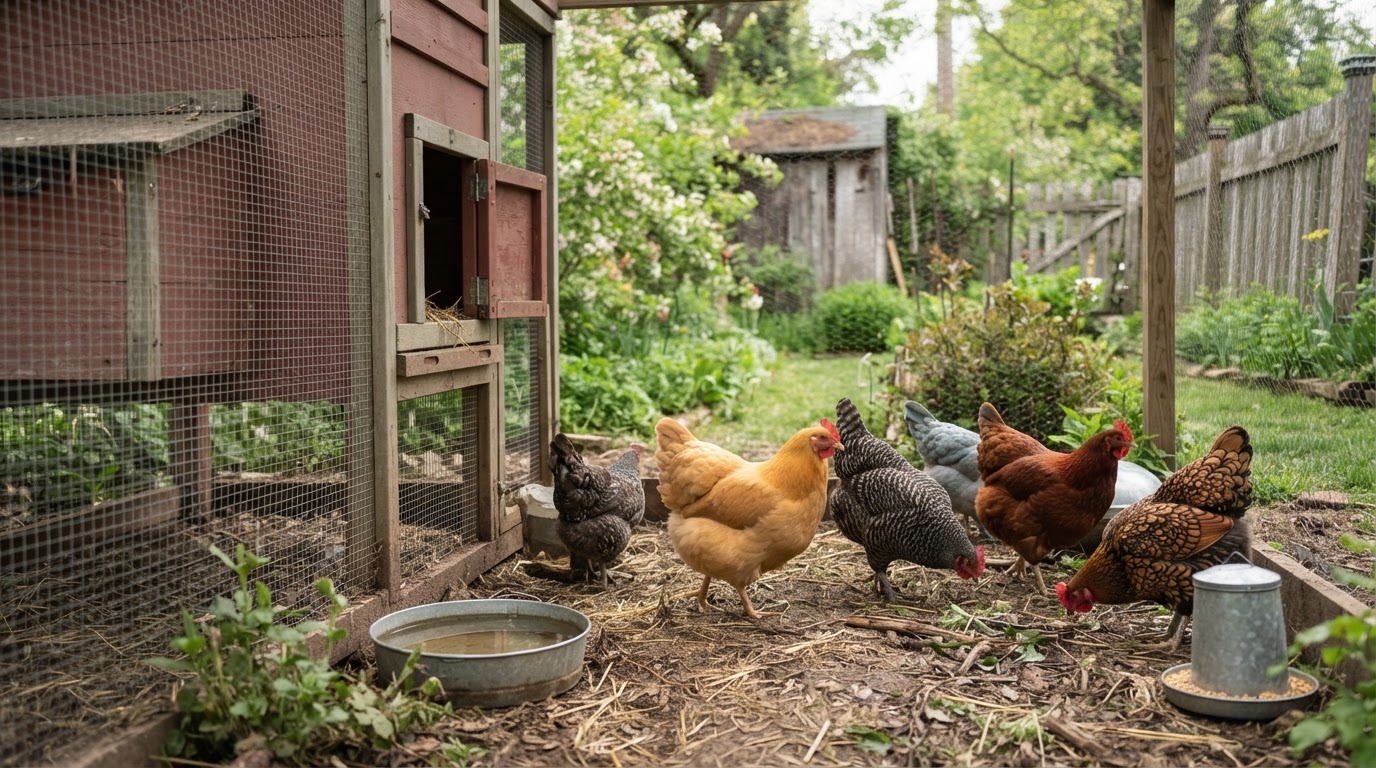
Start a small backyard laying flock for fresh eggs when stores run short. Space, breeds, feed, water, predators, costs, and local rules in one starter plan.
This article contains affiliate links. If you buy through these links, we may earn a small commission at no extra cost to you.
A small laying flock is a practical egg reserve when stores run short. This starter plan covers housing, feed, water, bedding, predators and rules for a first flock. For cold-month care, see our winter flock guide.
Quick answer: Check local rules, house a small flock dry and draft free, feed a complete layer ration plus grit, water twice a day with a power free pan, bed deep with shavings, and lock against predators at night.
Start with rules and neighbors
Check city and HOA rules before you buy birds. Many cities set a hen limit and ban roosters, per local ordinances. Tell neighbors your plan. Hens cluck. Roosters crow, which is one reason starters should skip roosters. Get chicks or pullets from a reputable hatchery or feed store, and confirm vaccination status at purchase.
Pick calm laying breeds suited to your climate. Barred Rock, Rhode Island Red and Australorp suit beginners across much of the US, per extension breed guides. Bantams lay smaller eggs and chill faster in cold, per University of New Hampshire Extension. Start with pullets near lay if you want eggs fast without brooder heat.
Housing that stays dry
A dry coop matters more than a warm coop. Ohio State Extension guidance says adult birds in a dry, draft free coop handle deep cold without added heat. Raise the coop off wet ground, slope the roof, and vent above roost height so moist air escapes without wind on the birds.
Give each bird roost space on wood, not metal. Wood stays warmer on feet than metal pipe. A flat 2x4 works well. Nest boxes need clean dry bedding so eggs stay clean and uncracked. One box per few hens is enough for a starter flock. For storm and outage routines, the winter flock guide covers ventilation, frozen water and outage checks in detail.
Feed: layer ration first, grit always
Feed a complete layer ration as the daily base, not scratch. Scratch is a treat. A 25-pound bag is the month scale reserve for a small starter flock, per manufacturer feeding rates. Store it sealed against mice and moisture, and rotate stock. The food and water storage guide covers rotation and pest proof storage for the house pantry, and the same rules fit feed.
Grit is not optional on bedding. Hens need insoluble grit to grind coarse grain, since penned birds cannot pick up stones, per Manna Pro feeding directions. Offer it free choice in a separate dish.
Probiotic feed is feed, not medicine. It carries live cultures to support digestion. It is not an antibiotic, needs no prescription, and does not treat disease. Use it as the daily ration per the label. For listless birds, bloody droppings, or breathing trouble, call a vet. Do not dose antibiotics from feed store shelves without vet guidance.
Water twice a day with no power
Hens need clean water every day to keep laying. Ohio State Extension guidance says to check water twice a day, including in the evening so birds have liquid overnight. Automatic waterers freeze and clog, so keep a manual pan as backup even if you own a heated bowl.
Rubber pans earn their place because ice pops out with a flex and they work with no grid. The GINDOOR pans below hold 1 gallon each and measure about 10.6 by 4.1 inches, per the GINDOOR product listing. Two pans let you rotate: one in the coop, one thawing or drying. Dump, scrub weekly, and refill with fresh water. In summer, shade the water and refill more often.
Bedding and cleaning
Keep 3 to 4 inches of dry pine shavings on the floor and in nest boxes, per Maryland Extension guidance. Deep dry bedding insulates feet, absorbs droppings, and cuts ammonia. Top up through the season and do the full cleanout when weather allows. A compressed 141-liter bag covers a standard starter coop floor with spare left, per the Small Pet Select product listing.
Watch for wet spots under waterers and roosts. Wet bedding raises frostbite risk in winter and fly pressure in summer, per eXtension poultry network guidance. Fix leaks fast. Compost used litter away from the coop and wash hands after handling, per CDC backyard flock hygiene guidance.
Predators and night lockup
Assume night predators. Raccoons, foxes, hawks and neighborhood dogs all test coops. Use hardware cloth, not chicken wire, on openings. Bury the skirt or add an apron so diggers hit mesh. Lock birds in at dusk with a latch raccoons cannot flip. Collect eggs daily so nests stay clean and predators get no reward.
Quarantine new birds before mixing flocks. Wash feeders and waterers on a schedule. Keep wild birds from sharing feed and water where practical.
Starter checklist
See Gear Worth Buying below for the four picks referenced here.
| Item | Why | Source |
|---|---|---|
| Local rules checked, roosters skipped | Fines end flocks fast | City or HOA code |
| Dry vented coop with wood roosts | Dry beats heated | Build or kit |
| Complete layer feed stored sealed | Daily base ration | see pick below |
| Grit offered free choice | Grinds grain on bedding | see pick below |
| Two rubber water pans | No power water plan | see pick below |
| Deep pine bedding plus spare bag | Dry floor and nests | see pick below |
| Hardware cloth and locks | Night predator proof | Hardware store |
| Cleaning and hand wash routine | Cuts disease risk | Household supplies |
Gear Worth Buying
- Purina Layena | Nutritionally Complete Layer Hen… (~$34.89, 4.6 stars): complete layer base ration in a 25-pound bag for a starter reserve.
- Manna Pro Chicken Grit with Probiotics, 5 lb Bag (~$9.99, 4.8 stars): insoluble grit with probiotics, offered free choice for birds on bedding.
- GINDOOR Rubber Feed Pan, 1 Gallon, 2-Pack (~$22.99, 4.5 stars): two flexible 1-gallon pans for a rotate and refill water plan with no power.
- Small Pet Select Pine Shavings Chicken Bedding, 141L (~$35.99, 4.5 stars): compressed pine bedding for deep dry floors and nest boxes.
Source notes: Poultry care from Ohio State, Maryland and New Hampshire Extension plus the eXtension poultry network. Feed rates per manufacturer directions. Hygiene per CDC backyard poultry guidance.
Frequently asked questions
Is probiotic chicken feed a medicine?
No. Probiotic feed is daily feed with added live cultures to support digestion. It is not an antibiotic and needs no prescription. It does not treat or prevent disease. Follow the label and call a vet for sick birds.
How many hens does a starter flock need?
Keep it small. A small backyard flock covers a family egg supply and keeps feed, water and cleaning work low. Check local rules first, since many cities set a hen limit and ban roosters.
What fails first in a power outage?
Water. Hens stop laying fast without clean water. Keep a rubber pan that works with no power, per Ohio State Extension guidance to check water twice a day, and store a spare feed bag sealed against pests.