
Rainwater Catchment for Garden and Flock: Roof to Barrel
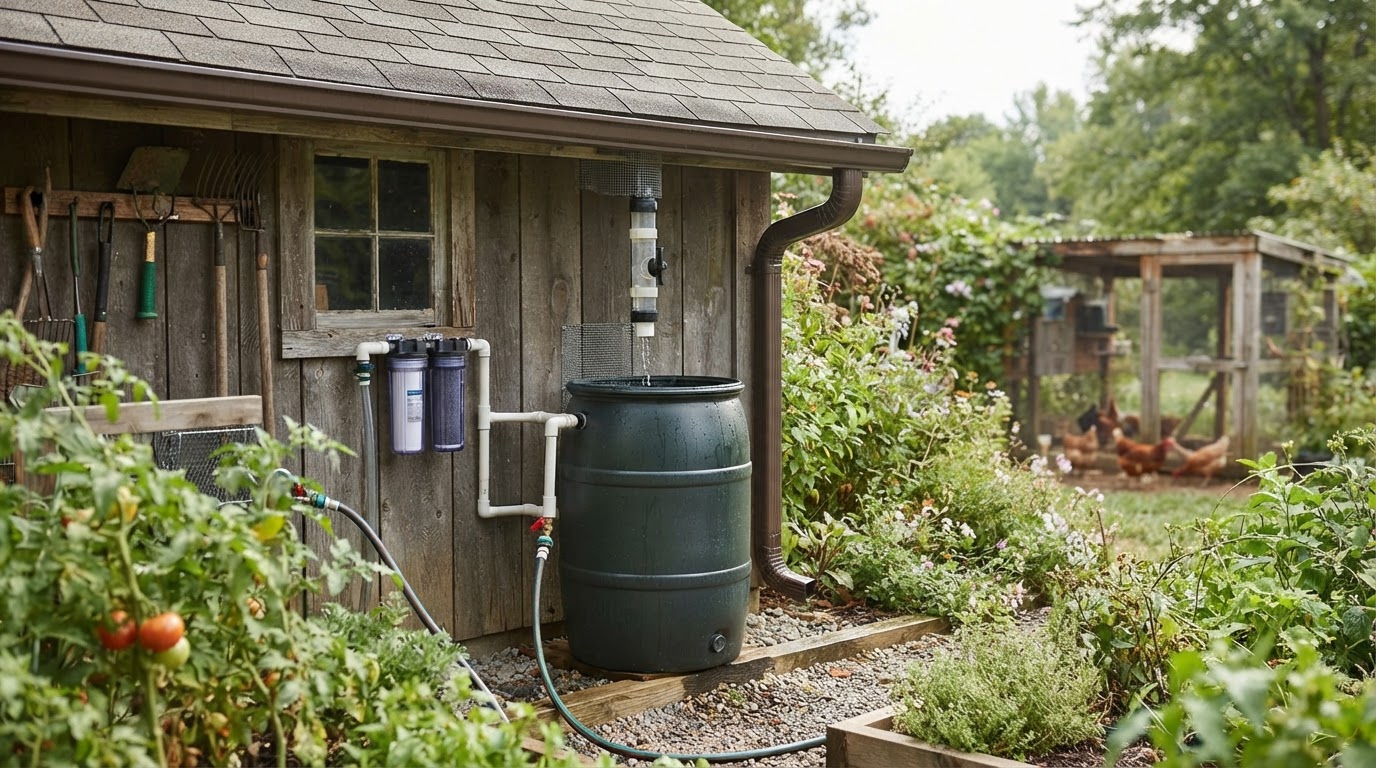
Turn roof runoff into garden and flock water: gutter screening, first-flush diversion, barrel storage and a filter stack for safe use in one tested plan.
This article contains affiliate links. If you buy through these links, we may earn a small commission at no extra cost to you.
A roof already collects water every storm. Gutters, a diverter, a barrel and a filter turn that runoff into garden and flock supply. This plan covers screening, first-flush, storage and treatment in order. For household reserves, see our food and water storage guide.
Quick answer: Screen gutters, divert the first flush, store in sealed opaque barrels, and treat before drinking: settle, filter, then boil or disinfect. Check local rules first, since some areas limit collection.
Screen the roof wash first
Leaves and grit start in the gutter. Stainless micro-mesh guards keep debris out while rain flows through, and screws hold them against storms, per the Raptor product listing. The 48-foot kit below fits standard 5-inch gutters and smaller. Clean valleys and downspouts before the rainy season so the first storm does not dump a season of dust into the system.
Metal roofs give the cleanest catchment. Asphalt shingles shed grit and age faster in sun, and old paint or treated wood anywhere upstream can leach lead or chemicals. When the roof or paint history is unknown, keep barrel water to garden and flock use, not drinking. Our emergency water sources guide ranks home sources when taps fail.
Divert the first flush
The first minutes of rain wash droppings, dust, pollen and debris off the roof. A first-flush diverter sends that wash aside and only then fills the barrel. The kit below mounts on the downpipe and resets between storms, per the Rain Harvesting product listing. Size the flush volume by roof area per the kit manual and local extension guidance.
Check rules before you build. Most US states allow rooftop collection, per extension summaries, but some cities, counties or HOAs limit barrel size, placement or use. Start with one barrel and expand only when the overflow plan works. Direct overflow away from foundations with a hose or splash block.
Store sealed, shaded and screened
Sunlight grows algae and heat sours stored water. The 50-gallon barrel below ships with a brass spigot for buckets and hoses, per the RTS product listing. Set barrels level on blocks, shaded and screened at every inlet. Sealed lids plus screens also block mosquitoes, which breed in open water within days. Our mosquito guide covers the rest of yard breeding control.
Clean barrels yearly with a brush and mild soap, rinse well, and inspect spigots and screens. In freeze zones, drain barrels and diverters before hard freezes so ice does not split them. For flock use, draw from the spigot into the rubber pans from our flock starter, scrub pans weekly, and refill often. For garden beds, the drip setup in our calorie garden starter pairs well with barrel supply. Watch household math in our water budget guide so garden watering never eats drinking reserves.
Treat before drinking
Barrel water is surface water. Even clear barrel water can carry bacteria and protozoa from droppings, plus fine roof sediment. Settle it first, then filter, then disinfect. The squeeze filter below is rated 0.1 micron absolute and removes bacteria and protozoa, per Sawyer specs, but not viruses or dissolved chemicals. Finish with a rolling boil or a tested chemical dose per label directions.
Never drink untreated barrel water during or right after nearby spraying, roofing work, or wildfire ash fall. When in doubt, spend the fuel on boiling. Mark one container for treated drinking water and keep garden and flock draws separate.
Starter checklist
See Gear Worth Buying for the four picks referenced below.
| Item | Why | Source |
|---|---|---|
| Local rules checked | Some areas limit collection | City or county code |
| Gutters guarded and cleaned | Debris never reaches barrel | see pick below |
| First-flush diverter fitted | Dirty wash goes aside | see pick below |
| Sealed opaque barrel on blocks | Algae and mosquitoes out | see pick below |
| Filter plus boil or dose | Drinking needs both steps | see pick below |
| Overflow routed from house | Wet foundation helps nobody | Splash block or hose |
Gear Worth Buying
- Raptor Stainless Steel Micro-Mesh Gutter Guard, 48… (See current price): stainless micro-mesh guard kit for gutters 5 inches and smaller.
- Rain Harvesting WDDS98 Downpipe First Flush Water… (~$99.95, 4.0 stars): downpipe diverter that sheds the first roof wash.
- RTS Home Accents 50-Gallon Rain Barrel with Brass… (See current price, 4.4 stars): 50-gallon barrel with brass spigot for garden and flock draws.
- Sawyer Squeeze Water Filtration System (~$45.95, 4.7 stars): 0.1-micron squeeze filter for the filter step before disinfecting.
Source notes: Catchment practice per extension rainwater guides. Filter specs per maker. Drinking-water treatment order per CDC and EPA guidance. Rules vary by locality, check before building.
Frequently asked questions
Is rainwater safe for chickens?
Screened and settled barrel water suits garden and flock use when barrels stay sealed, shaded and cleaned, per extension guidance. Refresh often and scrub algae. For drinking water, filter plus disinfect as you would any surface water.
What does a first-flush diverter do?
It sends the first dirty roof wash aside so dust, droppings and debris do not reach the barrel. Size the flush volume by roof area per the kit manual and local extension guidance, and let it drain between storms.
Do I need to treat rainwater before drinking it?
Yes. Roof runoff carries droppings, dust and roof material. Screen it, settle it, then filter and disinfect. A 0.1-micron filter removes bacteria and protozoa per maker specs but not viruses or chemicals, so finish with boiling or a tested chemical dose.