
Hurricane Safety: What to Do Before, During, and After Landfall
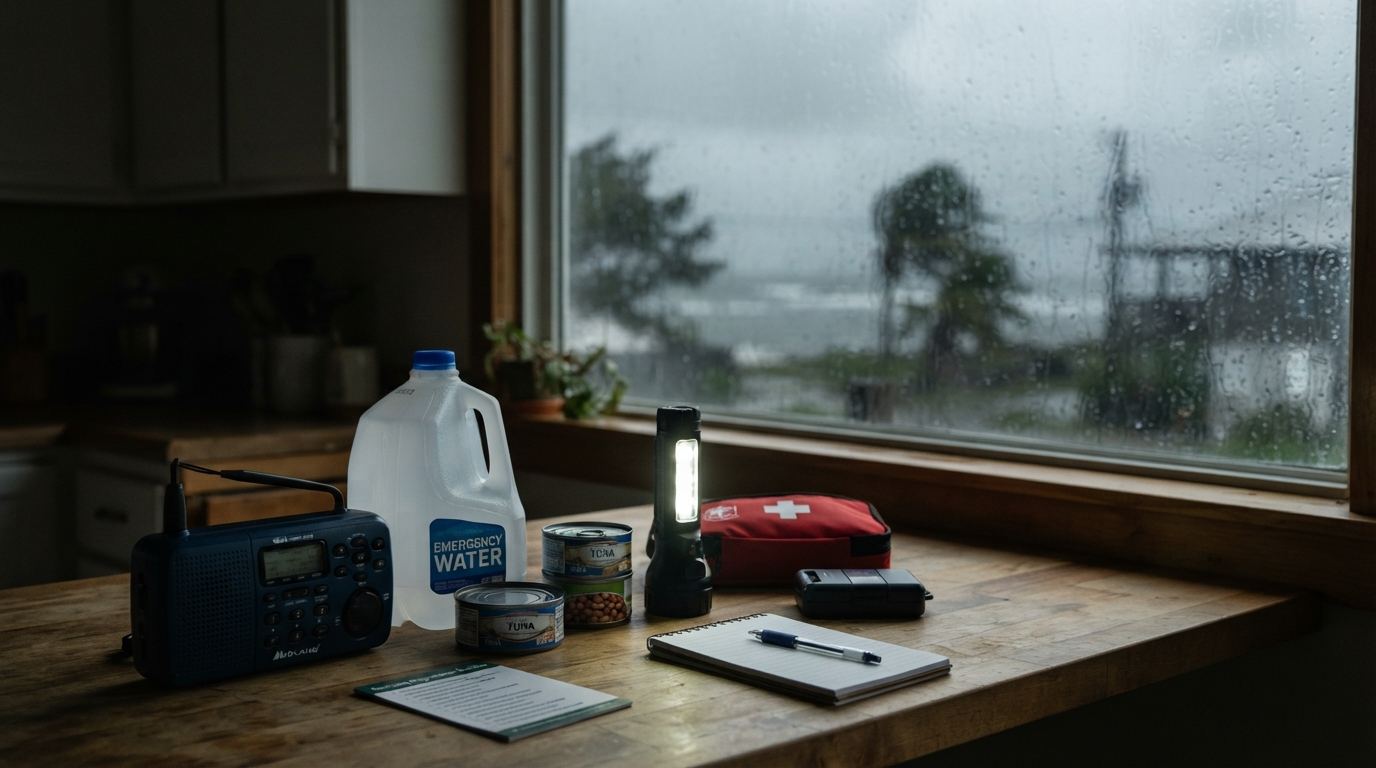
Hurricane safety before, during, and after landfall: hurricane watches vs warnings, evacuation plans, water storage, and what to do when the storm passes.
This article contains affiliate links. If you buy through these links, we may earn a small commission at no extra cost to you.
If you keep one thing from this guide: when officials order an evacuation, go. Storm surge has historically caused far more direct U.S. tropical-cyclone deaths than wind, and rising water can cut off evacuation routes before landfall.
Peak season, mid-August through October, is here. NOAA's 2026 outlook called for a below-normal year, and Tropical Storm Bertha still made landfall on the Gulf Coast in July. The time to prepare is the weeks before a storm gets a name.
Hurricane Safety Before Landfall
Know the Difference: Watch vs. Warning
Forecasters issue alerts in two tiers, and the surge alerts run on yet another:
| Alert | Issued When | What You Must Do |
|---|---|---|
| Hurricane Watch | Hurricane conditions possible within 48 hours | Review your plan, check supplies, secure outdoor items, know your zone |
| Hurricane Warning | Hurricane conditions expected within 36 hours | Finish preparations, fill fuel tanks, follow evacuation orders immediately |
A watch is a heads-up. A warning is a deadline. The hurricane category tells you sustained wind speed, not surge depth. Ike came ashore as a Category 2 and still produced 15 to 20 feet of surge on the Bolivar Peninsula; Katrina reached roughly 28 feet along parts of the Mississippi coast. Use the surge forecast and your evacuation zone, not the category, to judge the water threat. For the full breakdown of what each category means for wind and surge, see hurricane categories explained.
Surge alerts run on their own clock: the National Hurricane Center issues storm surge watches and warnings separately, and the surge warning can fire first. If it names your zone, that is the evacuation signal. See storm surge explained.
Write the Family Plan
Your plan answers four questions before anyone asks them:
- Evacuate or shelter? Know your flood zone and whether your home is built to withstand the expected winds.
- Where do we meet? Two locations: one in your neighborhood, one outside the hazard area.
- How do we stay in touch? Designate one out-of-state contact. Local lines jam; long-distance calls often route around the damage.
- What's the route? Map two exit routes and check them against the latest evacuation zone maps.
Build the Kit
Build the kit before a storm enters the forecast:
- Water: One gallon per person per day, for at least three days.
- Food: Three days of no-cook food. See our food and water storage guide.
- Radio: NOAA alerts don't need cell towers. The Midland ER310 Emergency Radio is the strongest fit when alert loudness matters.
- Power: A small power station like the EcoFlow RIVER 3 Portable Power Station keeps phones and medical devices charged.
- Purification: Inland flooding can contaminate tap water for weeks. The Sawyer Squeeze Water Filtration System filters 100,000 gallons and fits in a pocket.
- First aid: A stocked kit with bandages, antiseptic, and any prescription meds you take.
Fill Up Before the Wind Does
Gasoline and water vanish first when a storm approaches. Fill vehicle tanks and approved fuel containers 72 hours before the forecast window opens. Cash is second, ATMs and card readers fail without power.
Hurricane Safety During Landfall
Once the warning is issued, shelter or evacuate according to local orders.
Sheltering in Place
Move to a small interior room, bathroom, or hallway on the lowest floor, but not below ground. Basements flood first. Stay away from windows.
The Eyewall Is Not the End
The storm's eye brings sudden calm. Do not go outside. The back half carries winds that match the front, and the lull often lasts only minutes. Stay sheltered until officials confirm the storm has passed.
Never Run Generators Indoors
Generators, grills, and camp stoves produce carbon monoxide, a colorless, odorless gas:
- Generators run outside only, at least 20 feet from doors, windows, and vents.
- Never in a garage, even with the door open.
- Install battery-powered CO detectors on every floor.
- Wait for the generator to cool before refueling.
Windows: Tape Is Useless
Taping windows was a myth that cost thousands of panes. Hurricane-force debris shatters taped glass, and the tape creates larger, more dangerous shards. Boarding with plywood or installing impact-rated shutters is the only real protection, and it must happen before the wind arrives.
Hurricane Safety After Landfall
Wait for the official all-clear. Floodwater and downed infrastructure stay dangerous after the wind drops.
Floodwater Is Toxic
Do not wade, swim, or drive through floodwater. It's raw sewage, fuel, chemicals, and debris, and it hides live wires. Six inches stalls most vehicles; one foot floats them.
Treat Every Downed Line as Live
Assume every wire on the ground is energized, even after utilities report the grid is down. Stay at least 30 feet away and report to the utility.
Food Safety in an Outage
The 4-hour rule: perishables in a powerless refrigerator last about four hours; a full freezer holds its temperature roughly 48 hours. After that, throw it out. Our food and water storage guide has the full temperature tables.
Heat and Humidity After the Storm
With the grid down for days in late summer, survivors face 90°F-plus heat on top of the outage, a combination that turns a storm into a medical emergency for older adults. Budget backup power for cooling. Confusion, body temperature over 104°F, or sweating that stops means call 911. Our heat exhaustion vs heat stroke guide covers the full first-aid steps. Pets need water refilled twice a day and no pavement walks until sunset; the hot weather pet safety guide has the full no-power cooling plan.
The Water Emergency
If authorities issue a boil-water advisory, follow it until they lift it. Boil first, then filter with a Sawyer Squeeze Water Filtration System if supplies are limited.
Insurance Claims Done Right
- Photograph everything before cleanup.
- Document with video as you walk through the property.
- Make temporary repairs (tarp the roof, board windows) to prevent further damage.
- File promptly and keep a log of every call, adjuster visit, and receipt.
- Know your policy: standard homeowners policies exclude flood. Flood insurance has a 30-day waiting period; buy it in June, not in September.
Your Before-Landfall Checklist
Print this. Post it. Follow it.
- Know your evacuation zone and two routes out
- Hurricane kit stocked
- … filled
- Radio charged and tuned to NOAA
- Backup power ready: EcoFlow RIVER 3 Portable Power Station
- Water filter packed
- Vehicle tanks full, cash on hand
- Documents in waterproof bag
- Yard secured
- CO detectors tested
- Emergency contact list shared
Make these decisions and fill the kit before a watch is issued. Bertha proved in July that quiet forecast years still produce landfalls.
Frequently asked questions
What should I do when a hurricane warning is issued?
Finish preparations within the warning window (usually 36 hours): board or shutter windows, charge everything, fill the bathtub with water for flushing, and move outdoor furniture inside. If officials order your surge zone to evacuate, leave early and in daylight.
What do I do if I'm told to evacuate during a hurricane?
Leave as early as possible. Take your go bags, documents binder, and a full tank of gas. Stay inland with friends, at a hotel outside the surge zone, or in a designated public shelter. Shelters accept pets only when listed as pet-friendly, so check before you go.
What should I do after the hurricane passes?
Wait for the official all-clear before going out. Assume downed lines are live, do not drive through standing water, photograph damage before cleanup, and run generators outdoors at least 20 feet from the house. Generator exhaust can cause fatal carbon monoxide poisoning.