
Evacuating with Pets: Carrier, Harness, and the Day-Of Plan (2026)
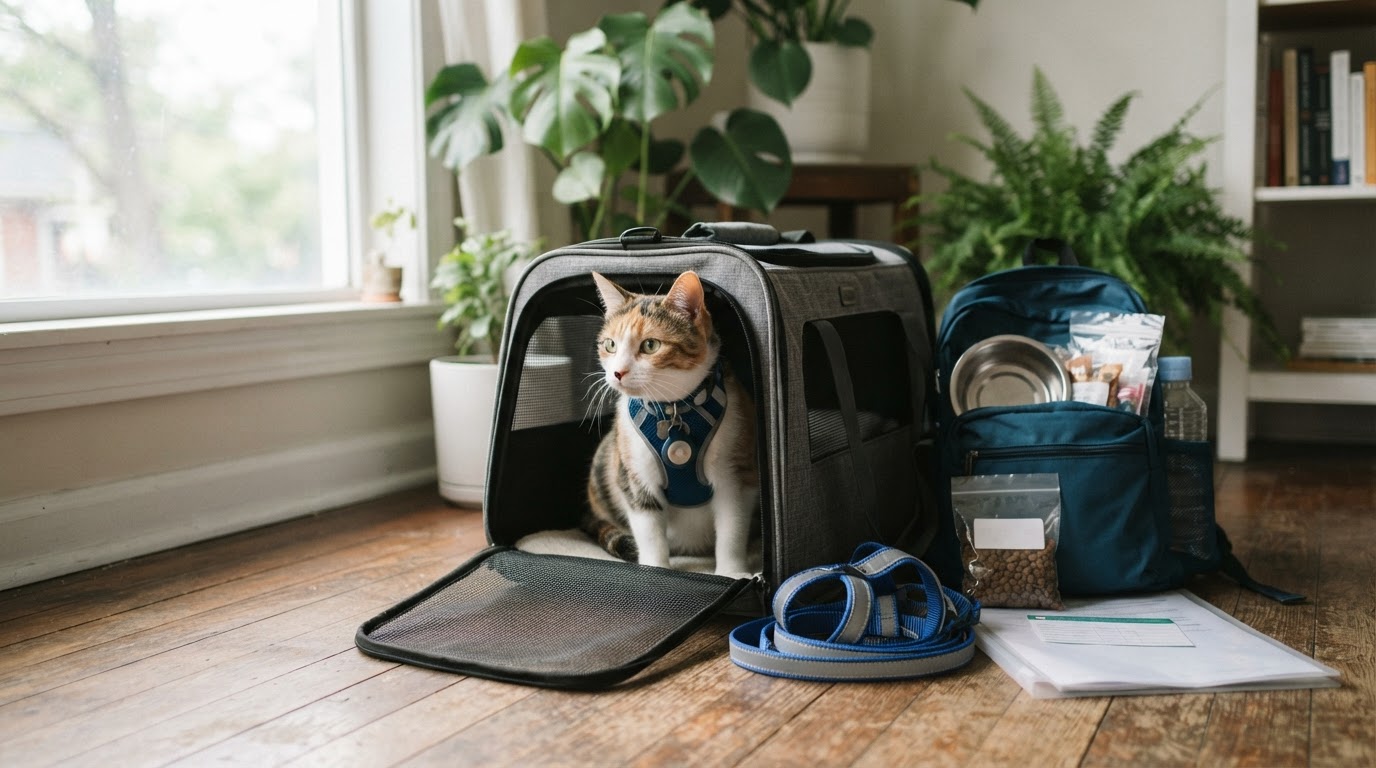
Evacuating with pets: pick a carrier and harness that hold, add ID and tracking, pack food and records, and know the day-of load order for dogs and cats.
This article contains affiliate links. If you buy through these links, we may earn a small commission at no extra cost to you.
Getting a dog or cat out safely depends on four things: a carrier or crate that fits, a well-fitted harness, current ID, and enough food, medicine, and records for the trip. Secure the pet when the people and car are ready, then leave while the roads are still easy.
Evacuating with Pets: The Four Layers That Matter
The emergency pet kit covers what to pack. This guide covers how the evacuation itself runs: the carrier, the harness, the paperwork, and the order you load the car. If the kit is the supply list, this is the rehearsal.
Layer 1: A Carrier That Fits and Travels Well
A carrier gives a cat or small dog a contained place in a car, hotel lobby, or shelter. Some facilities require one, and their size rules vary. The pet must be able to stand, turn around, and lie down. The Sherpa Original Deluxe Travel Pet Carrier is a soft-sided option with mesh ventilation and locking zippers, about $60 at the checked buybox. It is marketed for airline travel, but confirm the airline or shelter's current limits before leaving. Bigger dogs need a crate sized by the same rule. The Precision Pet One-Door Provalue Wire Dog Crate 30" is a 30-inch wire crate sized for 30- to 50-pound dogs, with a 5-point locking door designed to resist escape and a pan that pulls out for cleaning. It folds flat for the trunk, so it can live in the car during evacuation season instead of the basement.
Buy it early and make it familiar. Feed meals inside the carrier, leave it open in the room, and run one practice trip around the block each week. An animal that has only seen the carrier on evacuation day treats it as a trap, and a fight at the door eats the minutes you do not have.
Layer 2: A Well-Fitted Harness
A scared dog can back out of a flat collar in seconds. The Kurgo Tru-Fit Smart Dog Harness (about $25) has five adjustment points plus front and back leash clips. Fit it now and test gentle backward pressure indoors. No harness is escape-proof, so keep the leash attached whenever a carrier, car door, or building door opens. If your pet may bite when injured or terrified, ask your veterinarian about a basket muzzle and practice short sessions ahead of time.
Layer 3: ID That Works When the Tag Does Not
Collar tags get torn off in a scramble. The backup is the microchip, and a chip only helps if the registry has your current phone number, so verify the contact before storm season. Keep a recent photo of your pet on your phone, one that shows the markings clearly, because shelters and lost-pet groups ask for it constantly.
A tracker may help after a pet gets loose. The Apple AirTag 4-Pack (2nd Generation) (about $80) uses nearby Apple devices to update its location through the Find My network. It can play a sound, and compatible iPhones support Precision Finding at close range. It is not a GPS tracker and may update slowly where few Apple devices are nearby, so keep the microchip registration current.
Layer 4: Food, Meds, and Records That Travel
Three days of food is the floor and a week is better. Pack the brand the pet already eats because a stressed animal may refuse something new. The Wag Wholesome Grains Dry Dog Food 30 lb is about $61 at the checked buybox, but the 30-pound bag is a source package, not an evacuation bag. Portion three to seven days into a sealed container, label it with feeding amounts, and rotate the rest into regular meals. Budget water too: a 50-pound dog may drink roughly half a gallon a day, more in heat or stress.
Carry records in a folder, not a pile: proof of rabies and other vaccinations, a health certificate if you cross state lines or use a kennel, prescriptions in labeled bottles, and the photo. Boarding desks and pet shelters ask for paperwork while you stand there with a carrier in each hand.
Calls to Make Before Evacuation Season
Many public emergency shelters cannot house pets, and pet-friendly hotels fill quickly. Ask local emergency management where pets go, confirm two pet-friendly hotels within a half-day drive, and line up a boarding facility or out-of-area friend as backup. Write the answers on the same card as your family's out-of-area contact and meeting points. Recheck the list once a year.
The Day Of: Load Order That Works
Put carriers, leashes, medications, and documents by the door first. When the driver, passengers, and car are ready, secure each pet in a carrier or fitted harness and leave. Belt a carrier in according to its instructions or place it securely on the vehicle floor, never loose on a seat. Give the dog a last walk and the cat a last litterbox visit just before loading. Never leave an animal in a parked car. If fire drives the evacuation, the wildfire evacuation checklist covers the household side of the same departure.
If Transport Falls Through
Do not leave a pet because the first public shelter says no. Call local emergency management or animal control, then use the hotel, boarding, or out-of-area contact on your backup list. Ready.gov's pet guidance says to take pets with you when you evacuate. If authorities instead order you to shelter in place, keep the animal indoors with food, water, medicine, and identification. If a responder forces a separation, give them the pet's description, location, medical needs, and your contact information. Never tether an animal outside. The lost pet guide covers the search if you become separated.
The Printable Checklist
- Carrier or crate sized so the pet stands, turns, and lies down; meals fed inside before evacuation season
- Harness fitted; leash clips to the harness, not the collar
- Microchip registered with a current phone number; tracker attached if you use one
- Three to seven days of the usual food, plus water for the pet
- Records folder: rabies certificate, prescriptions, recent photo
- Emergency management, two pet-friendly hotels, and a boarding fallback written down
- Car and people ready before each pet is secured and loaded
Fit the harness, feed meals in the carrier, and make the calls now. Then you can leave without solving the plan at the door.