
Affordable Tiny Homes 2026: What $20,000 Actually Buys
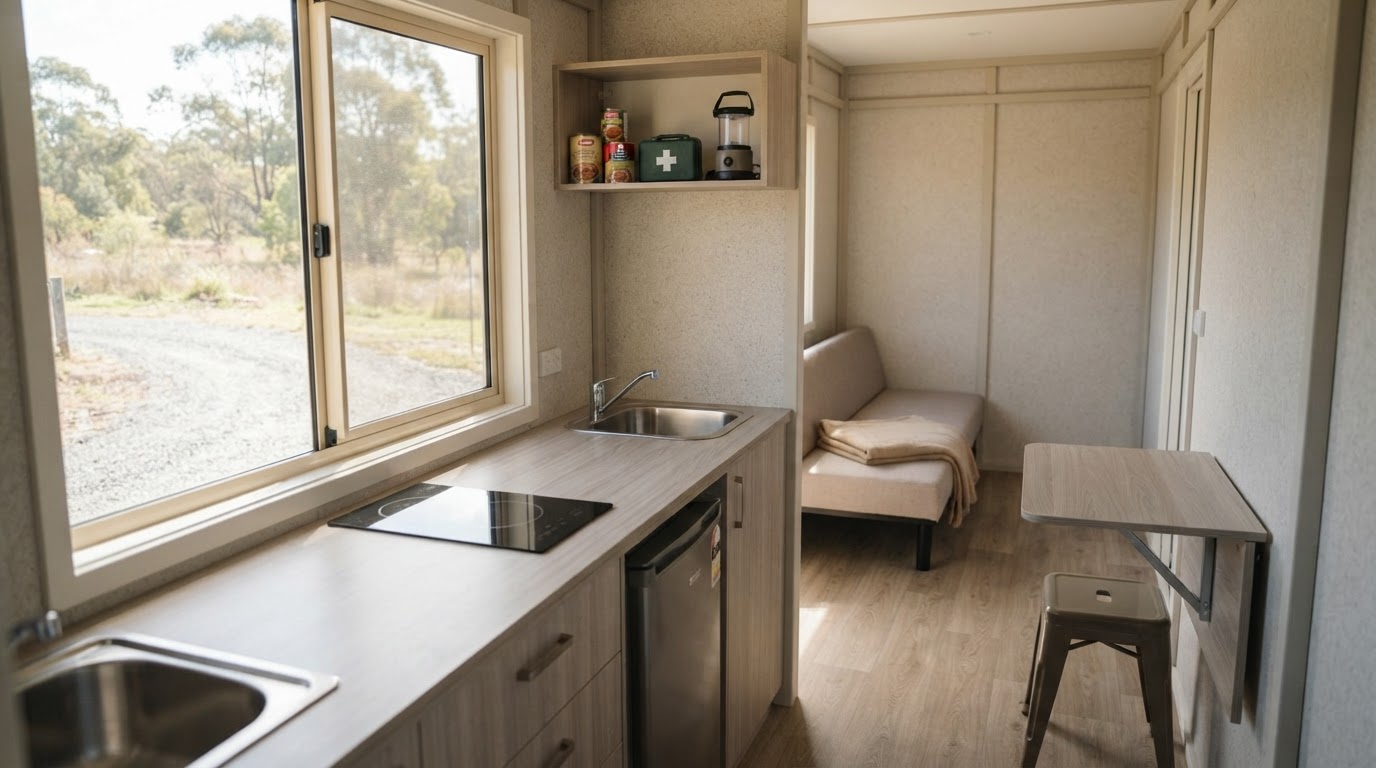
Foldable houses, prefab kits, and shed conversions compared on real delivered cost. What a $20,000 tiny home includes, what it hides, and the questions to ask.
This article contains affiliate links. If you buy through these links, we may earn a small commission at no extra cost to you.
A $20,000 tiny home sounds like the cheapest path to a roof of your own, or a backup shelter on family land. Sometimes it is. But the sticker price is never the delivered price, and the difference decides whether the purchase is smart or ruinous.
The Three Paths Under $25,000
Foldable factory homes. Boxabl's Casita folds up at the factory and unfolds on your foundation, marketed around $20,000 for a 375-square-foot studio. The honest caveats: that figure excludes land, foundation, utility hookups, delivery, and permits, which routinely double the all-in cost. Ask for the delivered-installed price in writing before placing a deposit, and research current fulfillment timelines yourself, since the company has been through well-publicized financial turbulence.
Prefab kits. Costco and lumber-yard kit homes ship as numbered panels you or a contractor assemble. The $20,000 Costco kits that keep going viral cover the shell and little else: no foundation, no electrical, no plumbing fixtures. Budget the same again for the finish work, and confirm your county allows the model, since some kit dimensions do not meet minimum dwelling sizes.
Shed conversions. A 12x24 shed shell runs a few thousand dollars; insulating, wiring, and plumbing it into a legal dwelling is the rest. This is the cheapest path and the slowest, and it only works where code allows accessory dwellings.
The Questions That Matter More Than Price
- What does the land cost, and is it buildable? A cheap structure on unbuildable land is an expensive lawn ornament. Perc test, flood zone, and access road come before any house decision.
- What can you legally put on it? Counties differ wildly on minimum square footage, foundation requirements, and whether wheels are allowed. Call the planning office with the exact model in mind.
- How does it handle your winter? A thin-walled unit rated for mild climates becomes a heating bill shaped like a house in a northern winter. Check insulation R-values, not marketing photos.
- What is the exit? A niche prefab depreciates like a vehicle, not like land. Buy it to use, not to flip.
The Preparedness Angle
A small paid-off structure on owned or family land is genuine resilience: no landlord, no mortgage payment during a job loss, a place to go if the city goes sideways. Size it for sleeping, cooking, and sanitation through a winter week without grid power, and it doubles as the ultimate bug-out location that you already live in part-time.
Start with the land and the permits. The house is the easy part.