
The Ultimate Bug Out Bag Checklist for 2026
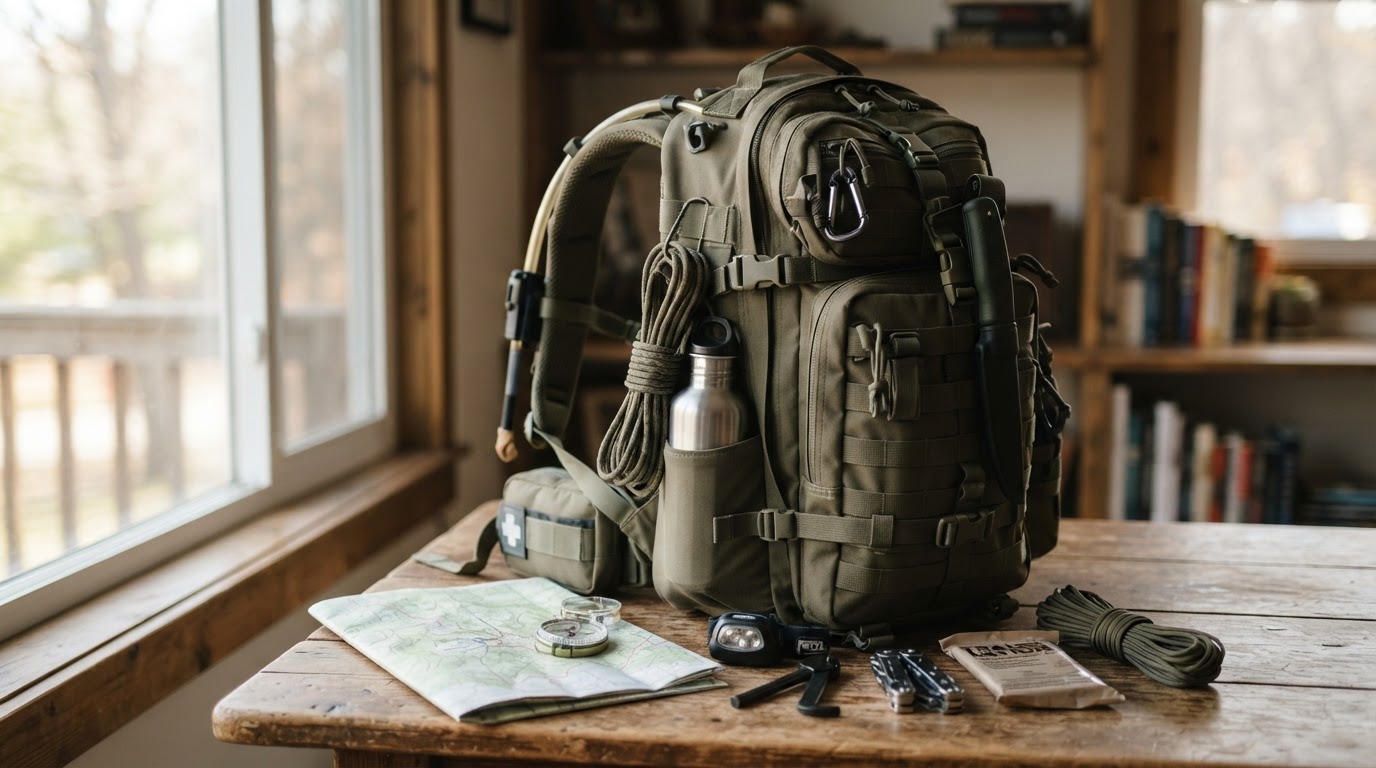
What to pack when you have minutes to leave. A complete, no-fluff bug out bag checklist with gear recommendations for every budget, from basic to premium.
This article contains affiliate links. If you buy through these links, we may earn a small commission at no extra cost to you.
A 72-hour bug out bag has to stay light enough to carry. Water drives the weight: every liter adds 2.2 pounds, so carry what your route requires and pair it with a filter plus 9 liters of total capacity. More money and more gear do not make a better bag. They make a heavier one, and the bag that actually gets grabbed in an evacuation is the one you can walk with. For the container itself, the Maelstrom 40L Hiking Backpack carries this entire list for about $36: water-resistant ripstop nylon and a rain cover included. Ours starts from the basic rule: 72 hours of water, food, shelter, first aid, and tools, because that's the window before organized help reliably reaches you in a regional disaster.
The Five Pillars of a Good BOB
- Water & Hydration, 72 hours minimum
- Food & Calories, No-cook, high-energy
- Shelter & Warmth, You might sleep outside
- First Aid & Hygiene, Minor injuries become major without care
- Tools & Communication, Navigation, light, and staying informed
Water & Hydration
Minimum: 3 liters per person per day. That is 9 liters for one person over 72 hours, or 18 liters for two. Water is heavy (2.2 lbs/liter), so every serious kit pairs carried water with a filter instead of trying to haul the whole amount.
Tier 1, Budget (~$30)
- LifeStraw Personal Water Filter, Filters 1,000 gallons, weighs 2 oz
- 2x 1-liter Nalgene bottles, Indestructible
- Purification tablets as backup
Tier 2, Mid-Range (~$65)
- Sawyer Squeeze Water Filtration System, Faster flow, attaches to bags
- 2x CNOC Vecto 2L dirty water bags
- MSR DromLite 4L water bag for camp storage
Tier 3, Premium (~$120)
- Grayl GeoPress Water Purifier, Filters AND purifies viruses in 8 seconds
- Platypus GravityWorks 4L, Filter by gravity, no pumping
Food & Calories
Aim for 2,000+ calories per person per day, so at least 6,000 calories for the 72-hour window. No-cook is king; you may not be able to light a stove, and hot cooking draws attention.
Tier 1, Budget (~$25)
- Datrex 3600 Emergency Food Bar, 3,600 calories, enough for 1,200 calories a day over 72 hours; add at least 2,400 calories to reach this guide's target
- Clif Bars / protein bars (pack 6-8)
Tier 2, Mid-Range (~$60)
- Mountain House freeze-dried meals (6-pack, just-add-water)
- GSI Outdoors Glacier Stainless Cup, eat and drink from it
- Electrolyte packets (10-pack)
Tier 3, Premium (~$100)
- Peak Refuel freeze-dried meals, Highest calorie density
- MSR PocketRocket 2 Ultralight Camping Stove, 2.9 oz, boils a liter in about two minutes off a 4 oz isobutane can (canisters sold separately)
- Snow Peak titanium spork
Shelter & Warmth
Hypothermia kills more evacuees than dehydration. For an unplanned night outside, a breathable emergency shelter bag adds under a pound and a few degrees of survival margin, and a SOL 90% Heat Reflective Emergency Blanket reflects 90% of radiated body heat and fits in a pocket. Add a dry change of socks and a beanie, and you've covered the coldest 48 hours most evacuations actually involve.
For any bag meant for a car or trunk, double the warmth: a lightweight sleeping bag rated to 40°F or a fleece liner, plus a small foam pad so you're not sleeping on cold ground. The gold-standard pad is the …, a closed-cell foam accordion pad that weighs 14 ounces, folds flat, never punctures, and adds a real R-value between you and frozen ground. Tents are a camping luxury; a 5x7 tarp with 100 feet of … builds a shelter that sheds rain for a fraction of the pack weight.
First Aid & Hygiene
The most common evacuation injuries are blisters, cuts, and scrapes, not trauma, so a practical kit beats a surgical one for most people. Minimum: antiseptic wipes, assorted adhesive bandages, gauze, medical tape, butterfly closures, ibuprofen, and a mylar blanket. Buy adhesive bandages in enough sizes to cover repeated blisters and small cuts: a 100-count flex-fabric box runs about $9 (…). Butterfly closures are the list's answer for a cut that gapes: a box of thirty sterile 3M Steri Strip Skin Closures, 1/4" x 3"… runs about $7.50 and pulls the edges together while it heals.
Tier 1, Budget (~$17): First Aid Only 298-Piece All-Purpose Kit, 298 pieces covering cuts, burns, and sprains; takes abuse and costs as much as a takeout dinner.
Tier 2, Mid-Range (~$34): Adventure Medical Kits Mountain Series Hiker, a trail-oriented kit with better bandaging, blister care, and a printed first aid manual. Light enough for a daypack.
Tier 3, Serious (~$96 for both): add the Surviveware Large First Aid Kit for a household kit, plus QuikClot Kaolin Clotting Gauze for wound packing.
Add a hygiene pouch: travel toothbrush, hand sanitizer, biodegradable wipes, and a small bar of soap. Hygiene keeps a 72-hour wait from becoming a sick household.
Tools & Communication
Radio first, phone second. Cell service can be among the first things disrupted, so a NOAA weather radio that works off batteries or a hand crank is a reliable independent way to know which roads are closed and where the danger actually is.
- Tier 1, Budget (~$25): RunningSnail MD-090 Emergency Radio, AM/FM/NOAA, flashlight, hand crank, and USB out.
- Tier 2, Mid-Range (~$50): Kaito KA500 Emergency Radio, five power sources (AC, DC, batteries, solar, crank) and a reading lamp.
- Tier 3, Premium (~$80): Midland ER310 Emergency Radio, up to 45 hours of normal use, NOAA weather alerts, and a flashing SOS beacon.
Beyond the radio: a headlamp with spare batteries (a hands-free light is worth more than 40 oz of spare candles), a paper map of your region because your phone's GPS dies with its battery. The Rand McNally 2027 Road Atlas (~$25, spiral-bound, 152 pages) is the standard pick: whole-country coverage at a scale you can actually follow, and it never needs a charge. Then a multitool like Leatherman Wingman Multi-Tool that covers the cutting, wrenching, and wire work in one ~7 oz tool, a ferro rod or 20 waterproof matches, and a 100 dB whistle that carries further than shouting and costs $7. Cash in small bills, $60 or so, because card readers and ATMs go down together.
Recommendations Summary
- Best budget water filter: LifeStraw Personal Water Filter
- Best all-around filter: Sawyer Squeeze Water Filtration System
- Best premium purifier: Grayl GeoPress Water Purifier
- Best budget first aid: First Aid Only 298-Piece All-Purpose Kit
- Best trail kit: Adventure Medical Kits Mountain Series Hiker
- Best premium bleeding control: QuikClot Kaolin Clotting Gauze
- Best budget radio: RunningSnail MD-090 Emergency Radio
- Best premium radio: Midland ER310 Emergency Radio
- Best bag: Maelstrom 40L Hiking Backpack
The Bottom Line
Build the bag bottom-up from the five pillars, not top-down from a 47-item wishlist. Start with the 9 liters of water capacity, 6,000 calories, a shelter layer, a $17 first aid kit, and a $25 radio, pack them in a bag you can lift one-handed, and you're ahead of most households. Once it's built, check it twice a year when the clocks change: swap expired food, rotate the water, and refresh the medication. Treat it as a twice-yearly habit, not a one-time purchase. The SAS Survival Handbook, Third Edition (John 'Lofty'… is the one book worth a slot in the bag's outer pocket, shelter, water, navigation, and field first aid in 672 pages, readable by flashlight. If you're rounding out your medical skills, our burn first aid guide covers the one injury that needs a cool-water 20-minute clock and the difference between a scar and an ER visit.