
What to Do in a Nuclear Emergency: Get Inside, Stay Inside, Stay Tuned
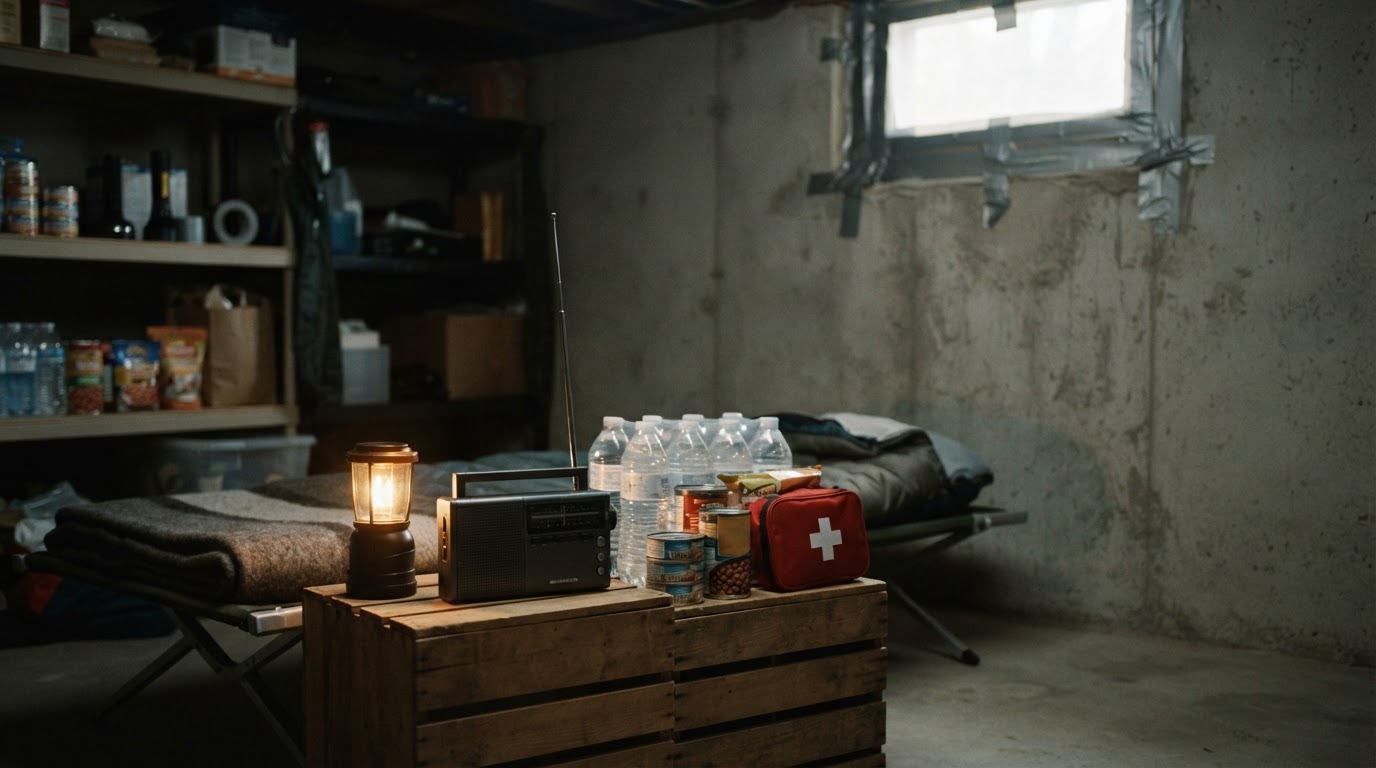
Nuclear blast or dirty bomb nearby? Get inside within 10 minutes, shelter the first 24 hours in a basement or brick center with vents sealed, and stay tuned.
This article contains affiliate links. If you buy through these links, we may earn a small commission at no extra cost to you.
A nuclear detonation, a dirty bomb, or a power-plant release all trigger the same protective plan. The walls of an ordinary building block much of the harmful radiation, and fallout weakens fast with time, so the people who survive are the people who get behind walls quickly and stay there.
Quick answer: Get inside the nearest building, go to the basement or center, and stay there. Ready.gov says you will have 10 minutes or more to get inside before fallout arrives, and to remain sheltered for the first 24 hours while radiation levels drop fastest. Close windows and doors, shut off fans and air conditioning that pull in outside air, bring pets in, and follow official instructions on a hand-crank radio.
The 10 minutes that matter most
After a detonation you have 10 minutes or more before fallout arrives, which Ready.gov calls enough time to reach shelter if you move immediately. If you see the flash, do not look at it: Arizona emergency guidance warns the fireball can blind you. Take cover behind anything solid, and if you are outside, lie face down to protect exposed skin from heat and debris. In a vehicle, stop safely and duck down inside it.
Once the shock wave passes, get inside the nearest building as fast as you can. If a multi-story building or basement is reachable within a few minutes, Ready.gov says go there first. Do not drive across town to a better shelter or to collect family: Ready.gov is explicit that family members should stay where they are inside and reunite later, because every minute outside during fallout arrival adds exposure.
Where to shelter inside
FEMA's shelter guidance ranks buildings: brick or concrete are best, underground garages and subways also shelter well, and inside any building the basement or middle floors protect most. Fallout settles on the outside of buildings, so stay as far from outer walls and the roof as you can, and keep away from windows. A basement corner or a windowless interior room is the goal.
If you sheltered somewhere weak because nothing better was reachable, keep listening: authorities may direct you to a stronger public shelter once the initial fallout settles, and Ready.gov says to follow their routes exactly if evacuation is ordered. Never self-evacuate on guesswork. Driving out through fallout exposes you more than sheltering and clogs roads responders need.
Stay inside for 24 hours
This is the part people get wrong, because a full day indoors feels like overreaction. It is the core of the official plan: FEMA says to stay inside for 24 hours unless authorities instruct otherwise, because the highest outdoor radiation levels come right after fallout arrives and then decrease rapidly. Ready.gov notes levels become significantly less dangerous during that first day, and calls sheltering an at-least-24-hour affair.
Plan for boredom, not heroics. Keep drinking water, food, medications, and a flashlight inside the room, because stepping out for supplies restarts your exposure. Keep pets and service animals inside too, which Ready.gov lists as part of the stay-inside order. Fire, gas leaks, or building damage outrank the radiation guidance: move to a safer building, then resume sheltering.
Seal the room and shut off outside air
Fallout is dust-like particles, and a room that breathes street air collects them. Both Ready.gov and the CDC give the same order: shut all windows and doors, turn off fans, air conditioners, and forced-air heating that bring in outside air, and close fireplace dampers. The kit is worth staging now: a roll of Gorilla Duct Tape, Black, 1.88 in x 35 yd (about $19) plus Frost King P1025 Polyethylene Sheeting, 4 mil, Clear (about $17), pre-cut to your windows and vents, seals a room in minutes when officials tell you to stay inside. Our chemical emergency guide drills the same sealed-room steps.
If you were outside when it happened
Fallout settles on clothing and skin like dust, and the CDC's cleanup steps are worth memorizing: before entering the shelter, carefully remove your outer clothing and bag it if you can, then wash uncovered skin and change into clean clothes. If you must stay outside briefly, the CDC advises covering your mouth and nose with a mask, cloth, or towel to cut down what you breathe in. A box of POWECOM KN95 Face Mask for Adults (10-Pack) (about $11.50 for ten) in the shelter room covers this better than a towel: KN95s catch the dust-sized particles cloth lets through, and ten is enough to hand one to everyone who comes inside with you. That is a bridge to shelter, not a substitute: nothing makes standing in fallout safe.
Dirty bombs and plant accidents
The CDC lists three radiation emergencies: a nuclear explosion, a dirty bomb that scatters radioactive material with conventional explosives, and a power-plant accident. A dirty bomb's blast wounds like any explosion, but its radiation behaves like fallout: go inside, stay inside, stay tuned. A plant accident may arrive with warning before any release, which is when you check whether authorities want sheltering or evacuation, since the answer depends on wind and distance that only they have.
Stage this now: radio, water, seal kit
Three items make the plan work. First, a way to hear orders when networks jam: a Midland ER310 Emergency Radio hand-crank radio receives NOAA alerts with no grid power or batteries. Second, sealed drinking water in the shelter room: a Reliance Aqua-Tainer 7 Gallon Water Container… (about $70 for 7 gallons) means nobody opens doors for water during the wait, and sealed containers keep fallout dust out of what you drink. Third, the tape-and-sheeting kit above, stored with scissors where you would shelter.
Tell the household the plan in a sentence each: inside fast, basement or middle, 24 hours, radio on. Add it to your family communication plan so your out-of-area contact knows where everyone shelters instead of driving toward the danger.
Quick Recommendations
- Memorize the order: get inside, go low or central, stay 24 hours, stay tuned. Ten minutes to shelter, one full day inside.
- Pre-cut plastic sheeting (Frost King P1025 Polyethylene Sheeting, 4 mil, Clear) for your shelter room and store it with duct tape (Gorilla Duct Tape, Black, 1.88 in x 35 yd) and scissors.
- Stage a hand-crank radio (Midland ER310 Emergency Radio), sealed water (Reliance Aqua-Tainer 7 Gallon Water Container…), medications, and a flashlight where you would shelter, not in the garage.
- Agree now that family shelters where they are and reunites later; nobody drives into the zone for pickup.
- If told to evacuate, follow the official route, and do not return until authorities clear it.
Sources: Ready.gov "Radiation Emergencies" and "Be Prepared for a Nuclear Explosion" sheet (10-minutes-or-more window, 24-hour duration, brick-or-concrete and basement guidance, ventilation shutoff, reunite-later and pet guidance); FEMA shelter-in-place guidance for nuclear/radiological incidents (24-hour duration, building ranking); CDC "What to Do: Get Inside" (clothing removal and washing, mask-or-cloth bridge, fan and damper order); Arizona Emergency Information Network nuclear-explosion page (flash blindness, face-down cover, vehicle duck-down); manufacturer guidance for product specifications.