
Infant Feeding in Outages: Formula, Water, and Pouches
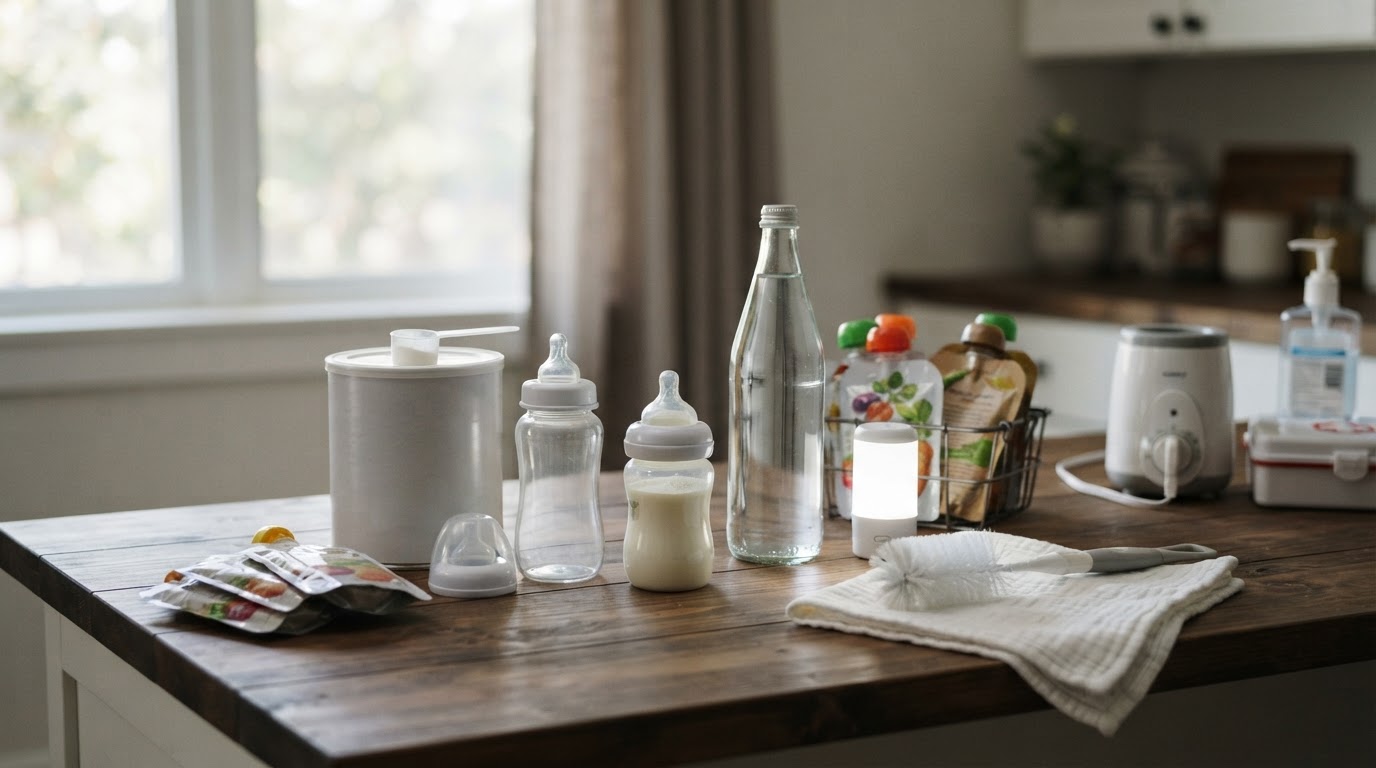
Feed baby safely with no power or tap water: formula rotation, safe mixing, breastfeeding continuation and pouch stocks in one tested family emergency plan.
This article contains affiliate links. If you buy through these links, we may earn a small commission at no extra cost to you.
Baby feeding has no improvisation margin. Bottles need the right formula at the right strength mixed with safe water, and breastfed babies need a calm supported parent. This plan covers both, plus pouch stocks for older infants. This is feeding logistics, not medical advice: brand and diet calls belong to the pediatrician. For the baby outage checklist, see our power outage with a baby guide.
Quick answer: Keep nursing on demand through the outage. Stock the pediatrician-recommended formula in rotation, mix only with safe stored water, wash hands and bottles every time, and never dilute. Pouches cover toddlers.
Keep nursing through the outage
Stress does not spoil milk. WHO and AAP guidance recommends exclusive breastfeeding for about the first 6 months and continued nursing alongside foods into the second year. Outages change nothing about that: nurse on demand, stay hydrated from stored water, and keep baby close for warmth and calm.
Power loss hits pumping, not nursing. A hand pump or manual expression backs up an electric pump, and chilled milk follows the same 4-hour room-temperature and 48-hour fridge rules as other perishables, per foodsafety.gov. If nursing stopped recently, relactation is possible with professional support; ask a lactation consultant or the pediatrician rather than working from internet instructions. Our water storage guide covers the extra drinking water nursing needs.
Rotate formula, never switch brands in a crisis
Buy the formula the pediatrician recommends and stock it in rotation, oldest first. Powdered cans typically date about a year out, per manufacturer dating, so a three-can reserve turns steadily without waste. The 3-pack of 36-ounce cans below suits a rotation shelf, per the Similac product listing. Check seals and dates on arrival and at every rotation.
Switching brands during an outage invites refusal, spit-up and intolerance exactly when stores are closed. If the usual brand vanishes from shelves, ask the pediatrician or pharmacist for the closest substitute before opening anything new. Ready-to-feed bottles need no mixing water and suit the first outage days; keep some alongside powder if the budget allows.
Mix safely or do not mix
Powdered formula is not sterile. It can carry Cronobacter, which threatens infants under 2 months, preterm babies and immunocompromised infants most, per WHO and CDC guidance. For those highest-risk babies, mix with water at 70C (158F), then cool quickly to feeding temperature, per WHO guidance. For older healthy infants, freshly boiled water cooled to lukewarm plus clean technique is the standard home method; follow the can label exactly.
Wash hands with soap and safe water before every bottle, sterilize nipples and rings, and measure powder level with the enclosed scoop. Use mixed bottles within 2 hours at room temperature, per CDC guidance. Refrigerate promptly and use within 24 hours. Discard leftovers from a finished feed. Never warm bottles in a microwave, which heats unevenly and burns mouths.
Safe water comes first. Mix only with stored or treated water you would drink yourself. Our pantry storage guide and water budget guide size the household reserve. When water is suspect, ready-to-feed formula plus nursing carry the day.
Pouches for toddlers, honey never for infants
Pouches bridge the gap once babies eat solids. The variety pack below gives 18 shelf-stable fruit and yogurt breakfast pouches that skip egg, gluten, peanut and soy, per the Beech-Nut listing. Check seals and dates, squeeze-test before serving, and toss swollen pouches the same way as swollen cans in our canned food shelf life guide.
Two hard rules. Never give honey to a child under 12 months: it can carry botulism spores an infant gut cannot stop, per AAP and CDC guidance. And never put babies to sleep with a propped bottle: it chokes, rots teeth and overfeeds. Hold and burp every feed, outage or not.
Starter checklist
See Gear Worth Buying for the two picks referenced below.
| Item | Why | Source |
|---|---|---|
| Pediatrician-recommended formula in rotation | No brand switches in a crisis | see pick below |
| Safe stored water for mixing | Powder needs clean water | Household reserve |
| Washed hands and sterile bottles | Cronobacter defense | Soap and safe water |
| Pouches by age and stage | Toddler calories without cooking | see pick below |
| Written feeding plan | Caregivers follow one method | Card on the pantry |
| Doctor and WIC numbers | Supply help before thinning | Phone list |
Gear Worth Buying
- Similac 360 Total Care Infant Formula Powder, 36 oz… (~$170.84, 4.8 stars): three 36-ounce cans of infant formula powder for rotation.
- Beech-Nut Toddler Breakfast Pouches Variety Pack… (~$26.18): 18 fruit and yogurt breakfast pouches, egg free, gluten free, peanut free and soy free.
Source notes: Feeding guidance per WHO, AAP and CDC. Storage and water planning per our linked guides. Product specs per maker listings.
Frequently asked questions
Should I stock a different formula for emergencies?
No. Stock the exact formula the pediatrician recommends and rotate it. Switching brands under stress risks intolerance and refusal. Check dates often since powdered formula typically keeps about a year, per label dating.
Is powdered formula safe to mix in an outage?
Yes with safe water and clean hands. For infants under 2 months, preterm, or immunocompromised, the WHO advises mixing with water at 70C (158F) to guard against Cronobacter, then cooling fast. Use mixed bottles within 2 hours at room temperature, per CDC guidance.
Can I dilute formula to make it last?
Never. Watered formula starves and can poison an infant through water intoxication, per AAP guidance. If supply runs short, call the pediatrician, WIC clinic, or emergency services rather than thinning bottles.