
Nationwide FAA Ground Stop: What Stranded Travelers Learned
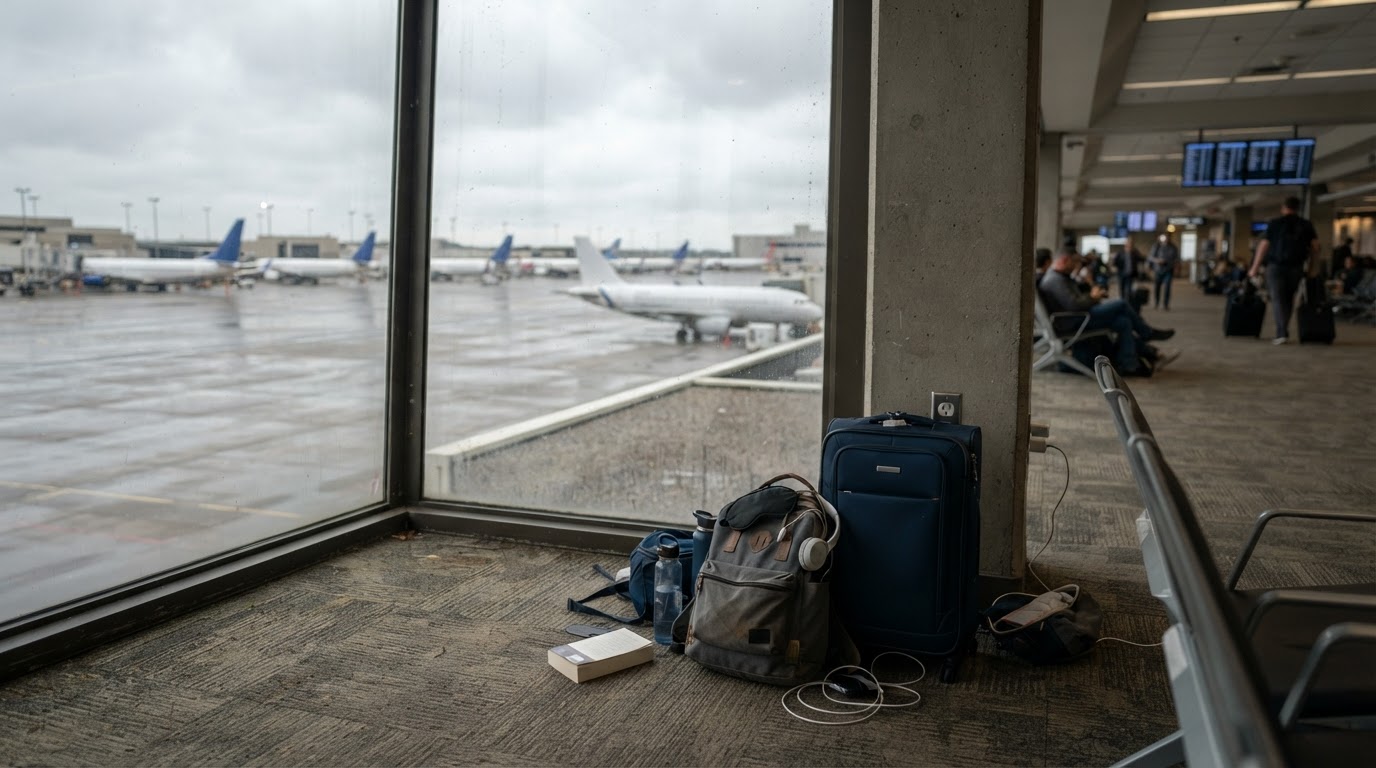
On Nov 13 the FAA halted every US departure after a network failure, canceling 18,000 weekend flights. Pack so the next one costs you hours, not days.
This article contains affiliate links. If you buy through these links, we may earn a small commission at no extra cost to you.
On Friday afternoon, November 13, the Federal Aviation Administration did something it had only done once before since 9/11: it halted every departure nationwide. A telecommunications failure knocked out air-traffic-control communications, and at around 3:30 p.m. ET the FAA issued a nationwide ground stop out of what it called an abundance of caution. Planes already in the air kept flying to their destinations. Nothing else took off until about 8:15 p.m., when the agency declared the system stable and let traffic resume.
The restart did not mean recovery. Airlines spent the whole weekend digging out, with planes, crews, passengers, and checked bags scattered across the wrong airports. FlightAware counted roughly 18,200 canceled US flights across the three days; the FAA's own Friday tally was about 12,460. By Monday morning the numbers had fallen sharply, with around 300 cancellations and 1,500 delays as of 9 a.m. ET, concentrated at Dallas-Fort Worth and Chicago O'Hare. American Airlines, the hardest-hit carrier, said it expected to run a largely normal schedule Monday and extended its travel alert with change-fee waivers through Wednesday, November 18.
Why the system stopped
The FAA's published Q and A on the ground stop pins the failure on its own network upgrade work. Contractor L3Harris had been replacing old copper lines with fiber at a radio site in El Dorado, Arkansas, including a new router. Around the same time, a recently replaced router at a radar site in Amarillo, Texas started flooding the FAA's FTI network with data, at a rate of about 1,000 connection attempts every four to five seconds. The surge knocked 17 of the agency's 22 air-route traffic control centers unstable and spread into several approach-control facilities. L3Harris isolated the two sites, the network stabilized, and as a precaution the FAA disabled the broadcasting function on about 60 similar routers while the investigation continues.
FAA Administrator Bryan Bedford said the agency sees zero evidence of anything nefarious behind the failure, a point worth stating plainly because outage rumors always outrun the facts. Transportation Secretary Sean Duffy has asked Congress for $50 billion to modernize air-traffic-control systems, noting that much of the current equipment is decades old. The root-cause investigation is still open, so treat every explanation of the exact trigger as preliminary.
Who this hit, and who should still care
If you flew this weekend, you lived it: missed connections, terminal floors, rebooking lines that moved one family at a time. If you did not fly, this still matters for one reason. Thanksgiving travel starts next week, one of the heaviest flying periods of the year, and the system that broke on Friday is the same system your holiday flight depends on. Airlines believe they will have full schedule integrity back, but displaced crews and aircraft take days to fully reset, and waiver windows close. Anyone flying between now and Thanksgiving should plan as though disruption is still possible.
If you are traveling this week: do this now
Check your flight before you leave for the airport, on the airline's app, not a third-party tracker. American's own guidance after the stoppage was exactly that: check status in the app before heading out. If your flight cancels, rebook in the app or by phone while you are still standing where the announcement found you. The gate line and the customer-service line contain the same people competing for the same shrinking pool of seats, and the app reaches that pool first.
Screenshot everything the moment trouble starts: boarding pass, cancellation notice, baggage receipts, hotel and meal receipts. If you are separated from a checked bag, file the claim before you leave the airport and keep the reference number on your phone, not on a slip of paper. A tracker in the bag helps here. An Apple AirTag (about $80 for four) rides in a checked bag and shows you where the bag actually sits while the airline's system catches up.
Apple AirTag 4-Pack (2nd Generation)
Pack your carry-on as though you will sleep in it. Medications, chargers, a change of clothes, snacks, water, and anything you need for work the next morning all belong on your person, because the weekend proved checked bags and passengers can end up in different cities. A charged power bank matters more than it sounds when thousands of people are hunting the same terminal outlets. Anker's 10,000mAh USB-C bank runs about $26 and refills a typical phone twice, which covers a day of rebooking apps, boarding passes, and ride-hailing.
Anker Power Bank 10,000mAh USB-C
Know what the airline owes you before you argue at the counter. US airlines must refund a canceled flight even on a nonrefundable ticket if you choose not to travel, and most carriers issued fee waivers for this event that let you move dates free. If you accept a rebooking days out, price a hotel yourself first: air-traffic-control disruptions usually do not trigger the meal-and-hotel vouchers that mechanical cancellations do. That gap is what a cash buffer exists for, and our emergency fund guide sizes one that covers exactly this kind of surprise night.
After this trip: fix it for the next one
Build a small travel go-bag and leave it packed. Power bank and cable, a water bottle, basic meds, a protein bar, copies of your ID and prescriptions, and enough cash for a night that a card reader outage cannot block. Most of that list already lives in a car emergency kit, so if you own one, copy it at half scale into a pouch that fits under an airplane seat.
The stranded logic in our guide to surviving being stranded in your car transfers directly: stay with your resources and spend energy on the highest-value action first. At an airport that means rebook first, then food and rest, then baggage. People who reversed that order spent Friday night in the wrong line.
Finally, keep perspective on the risk itself. A ground stop is the system working as designed: controllers who cannot talk to planes safely stop launching planes. The failure to prepare for is not the stoppage, it is arriving at it with a dead phone, all your essentials in the hold, and no money for a hotel. Friday stranded thousands of people who did everything right and still slept in terminals. The difference between an expensive story and a miserable one was mostly what they carried.